
Architect Firm: 3andwich Design / He Wei Studio
Principal Architect: He Wei
Design Team: Wang Ziyi, Wu Wenquan, Liu Hao, He Xingchen, Meng Xiangting, Wang Jun, Zhi Haiyang, Zhou Xuanyu
Location: Ningde, China
Area: 460 sq. m
Completion Date: September 2024
Photography: Dong Image
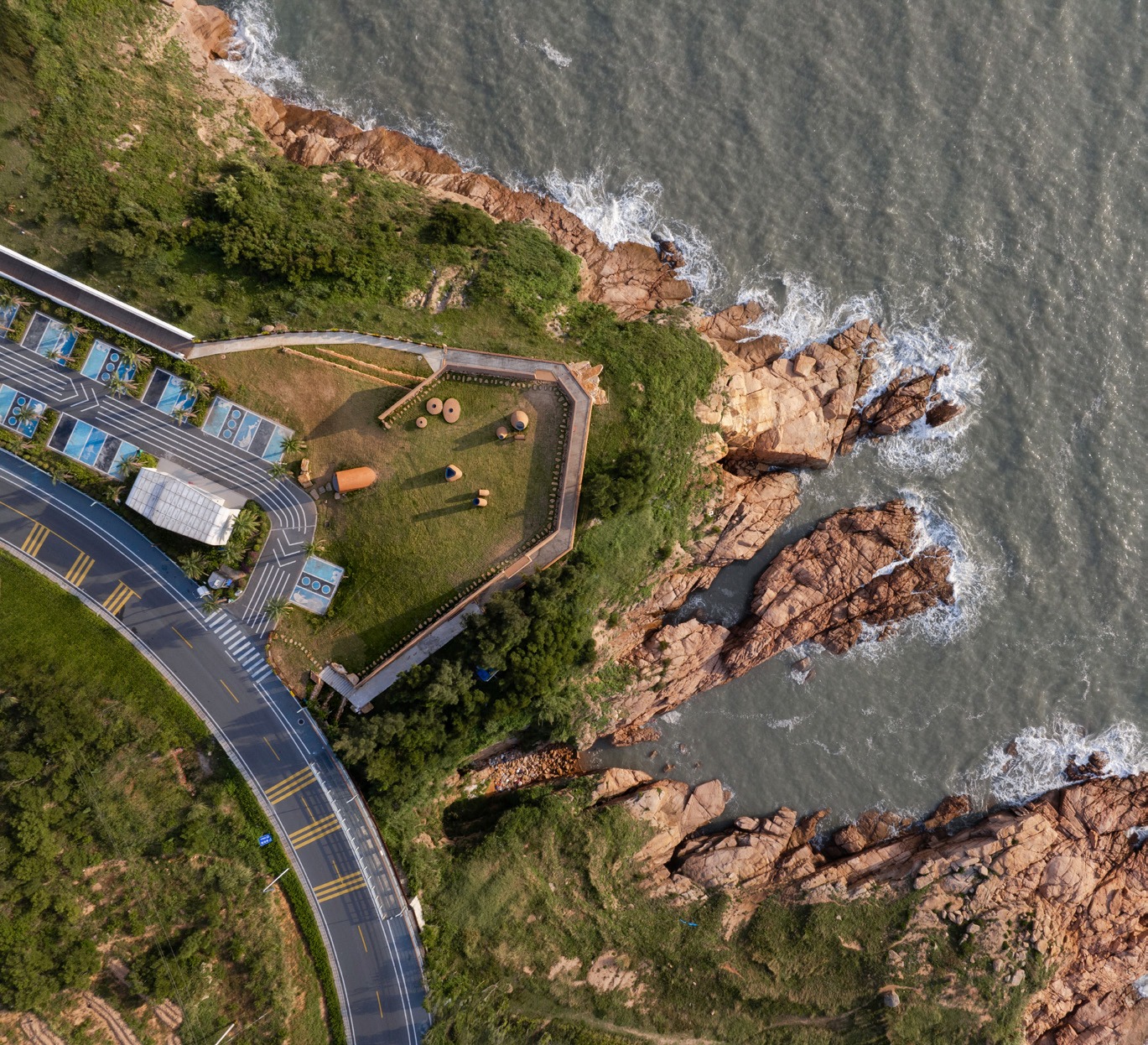
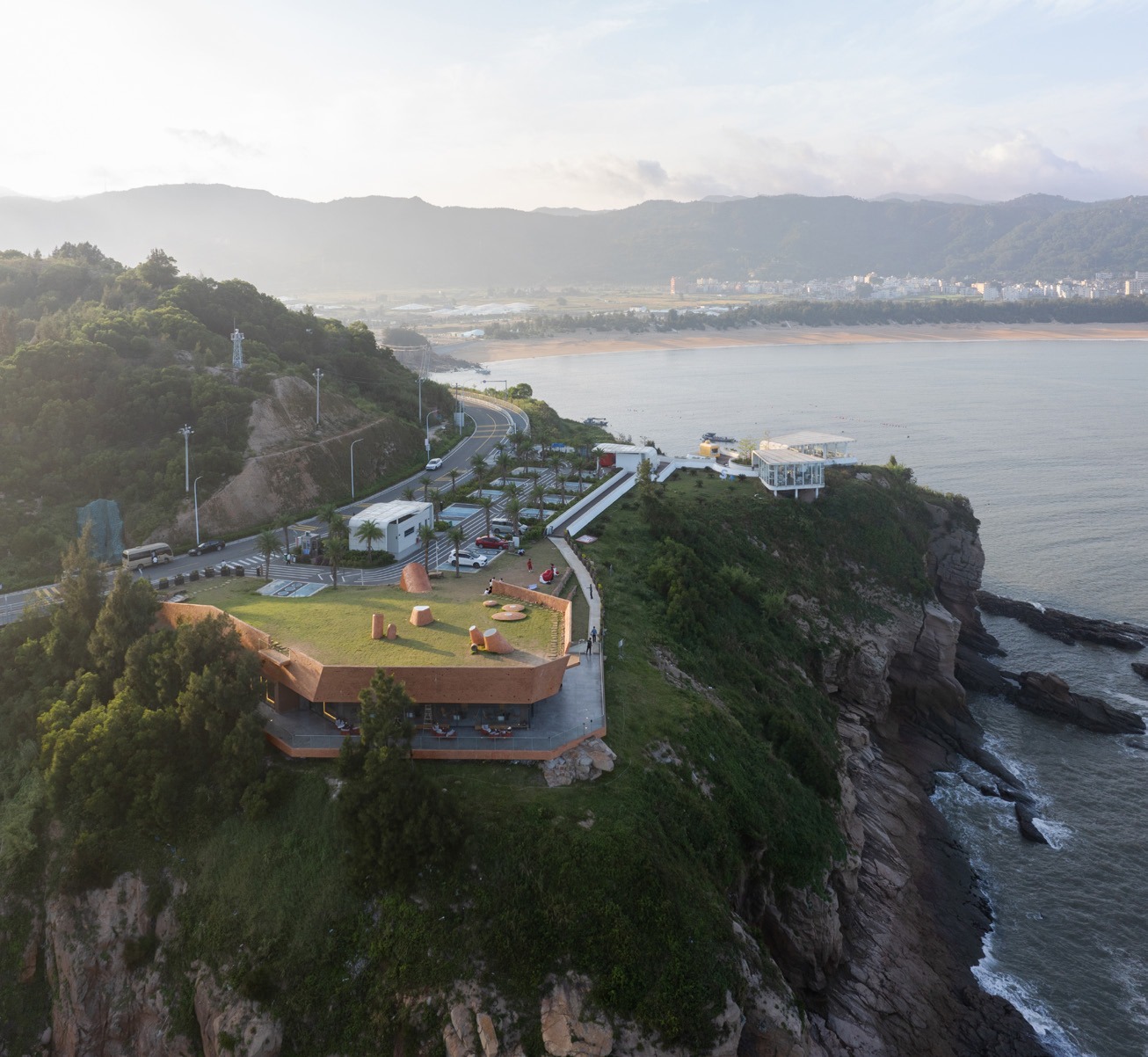
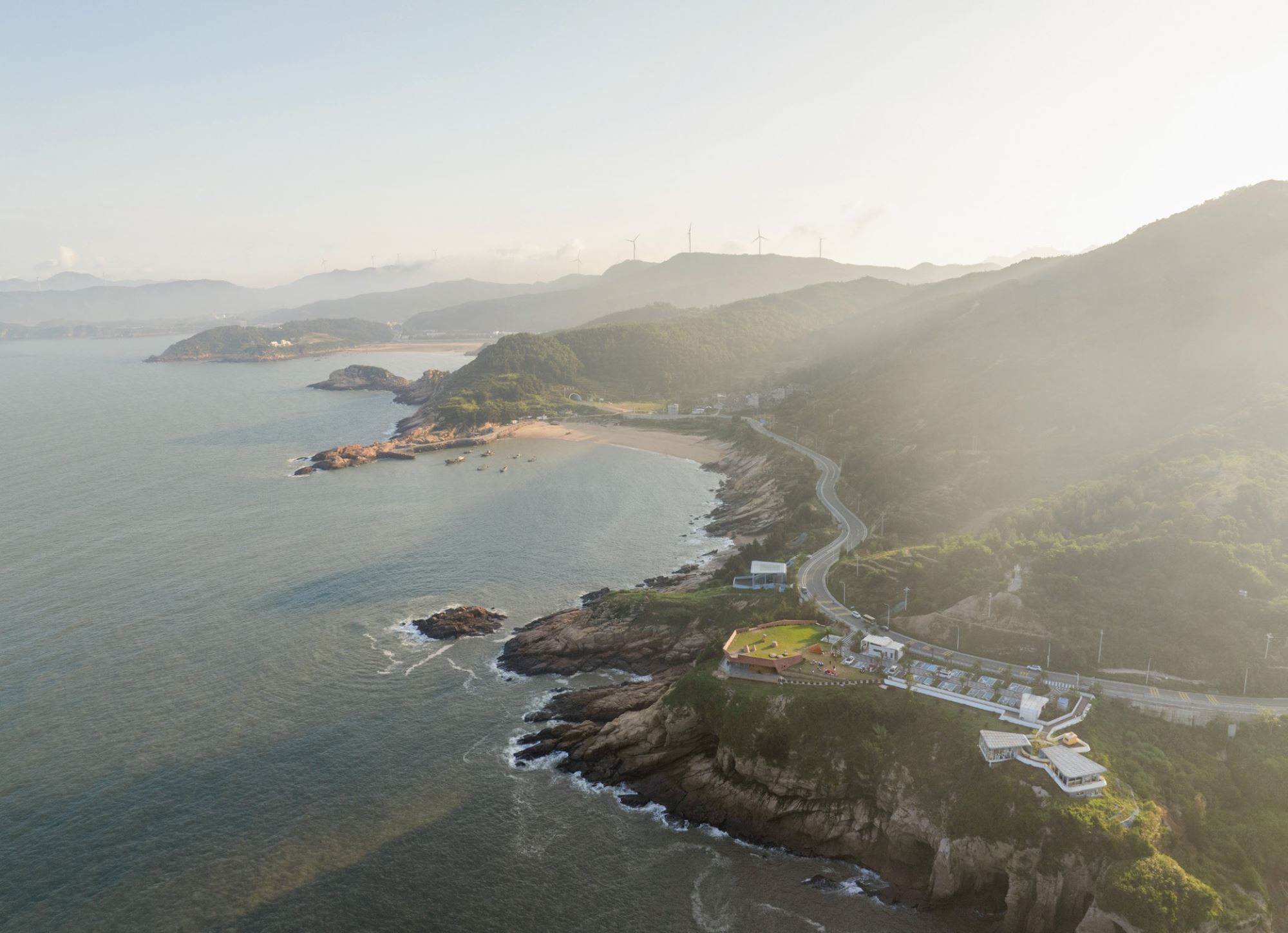
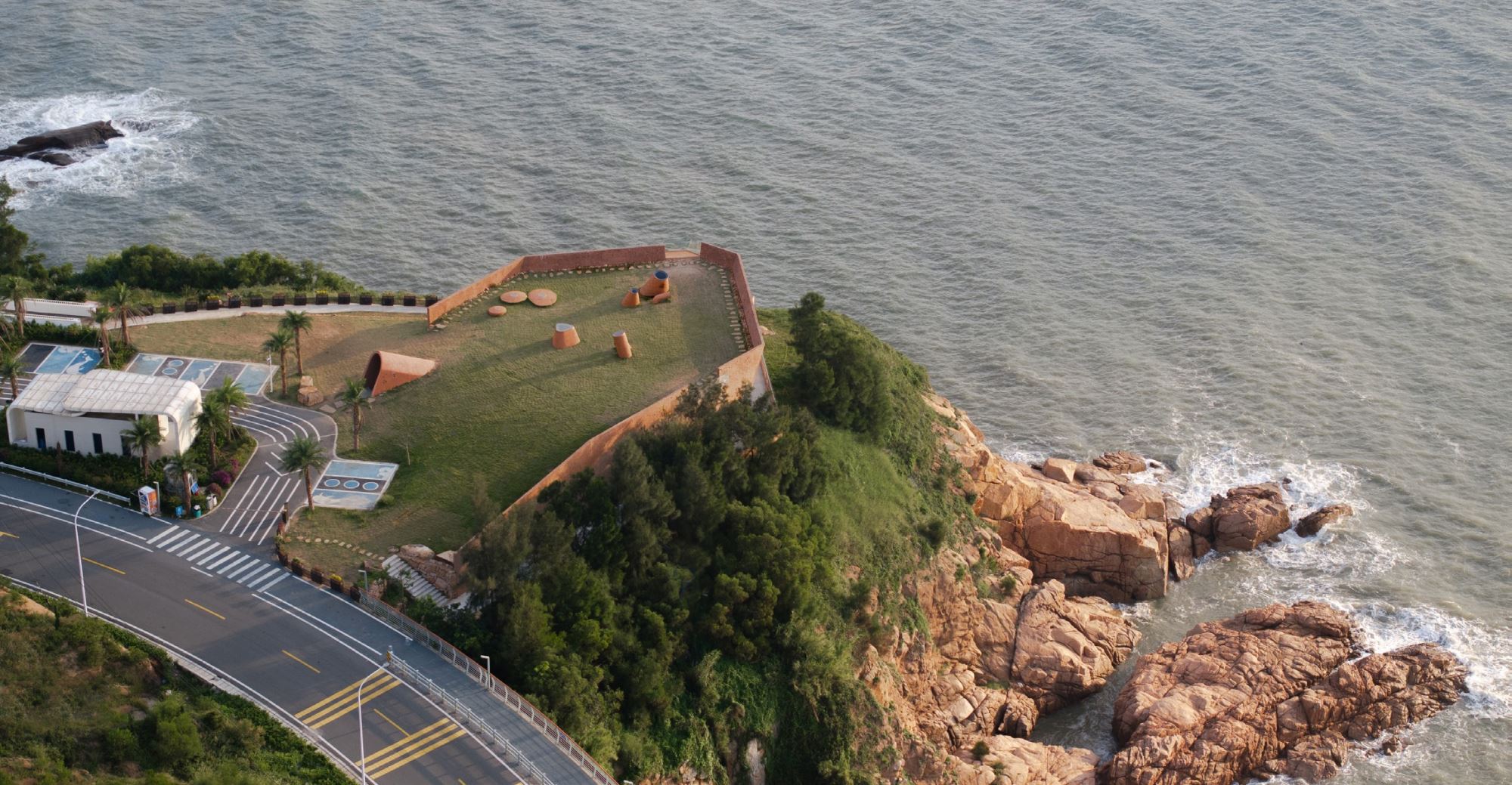
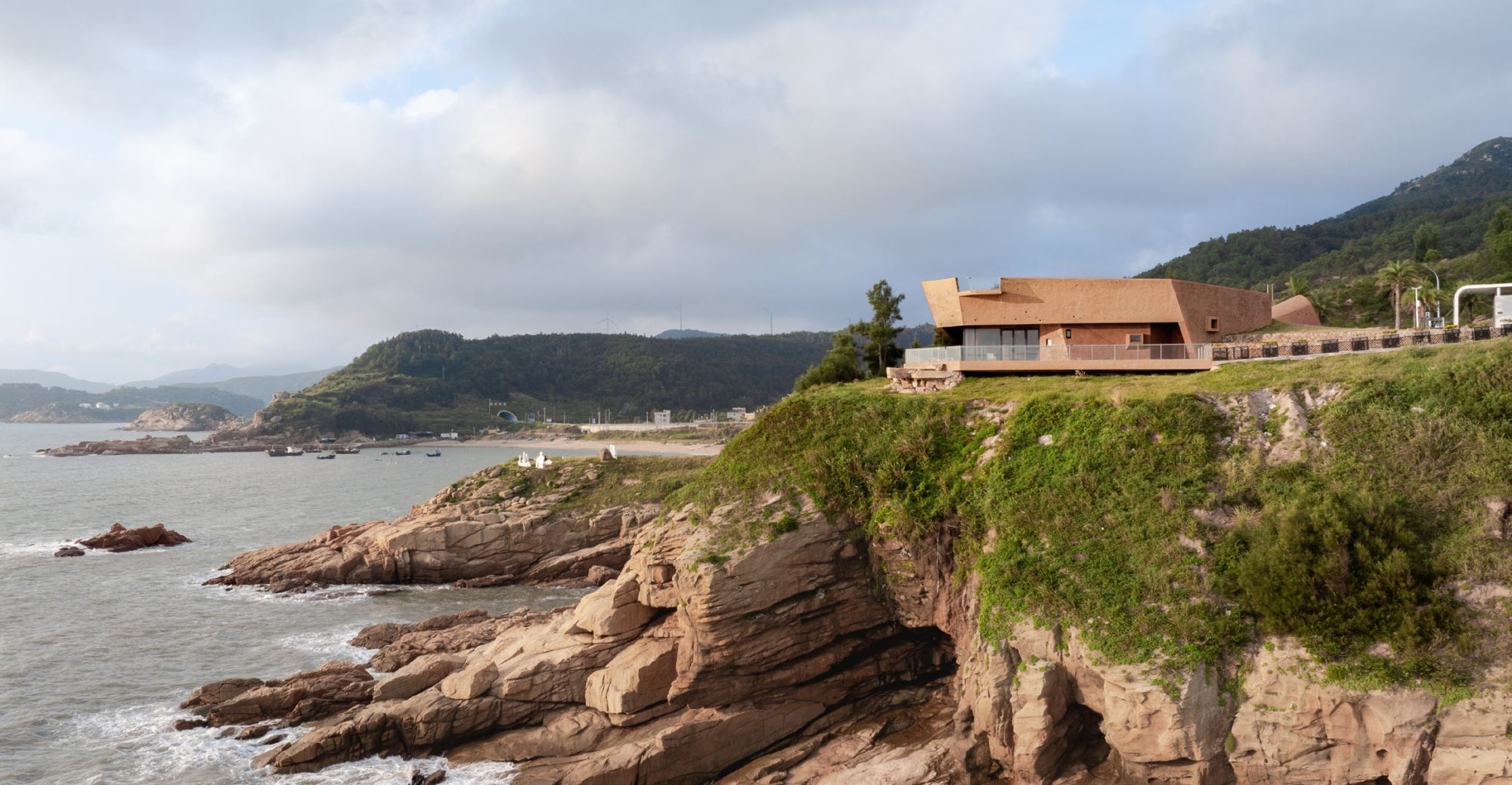
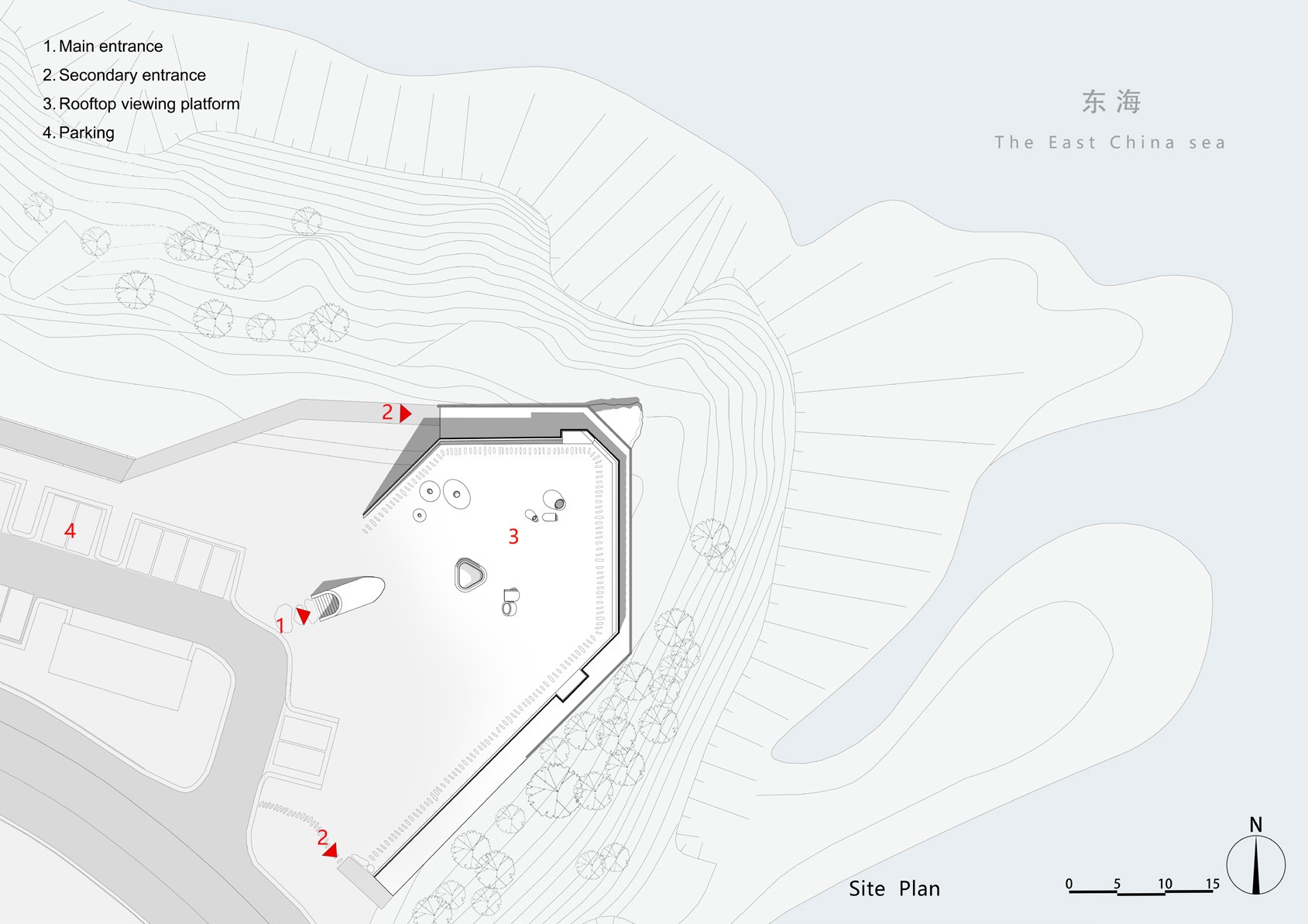
The project is situated along Donghai No.1 Road, Ningde City, Fujian Province, China. The site boasts a vast vista. Directly in front of the platform stands Biia Mountain Island, rising majestically from the sea, with numerous reefs and sea caves lining the clifs below. The building should provide cultural activities, gathering and resting places for tourists while maintaining a good sea view efect on the original site, taking into account certain catering functions.
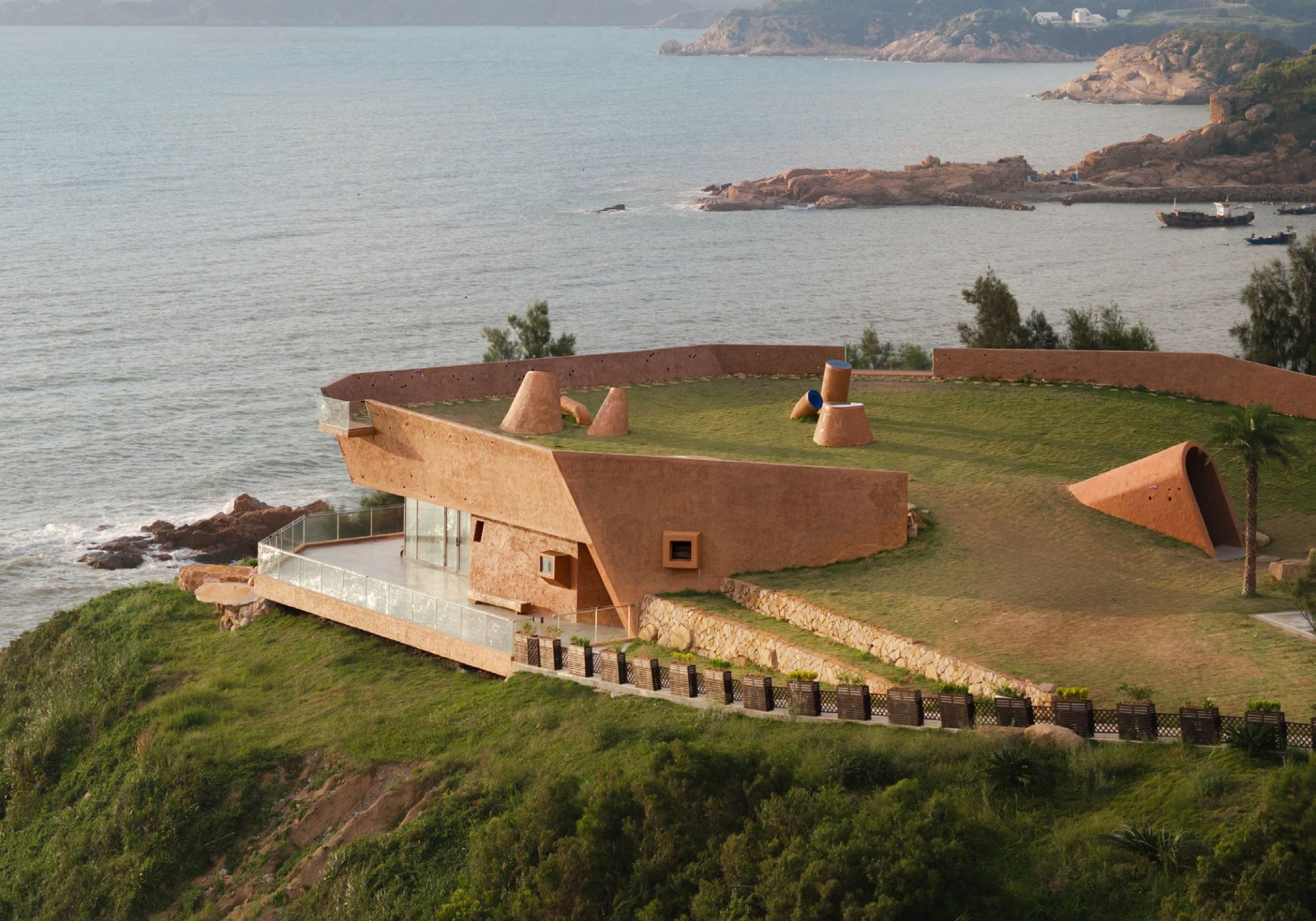
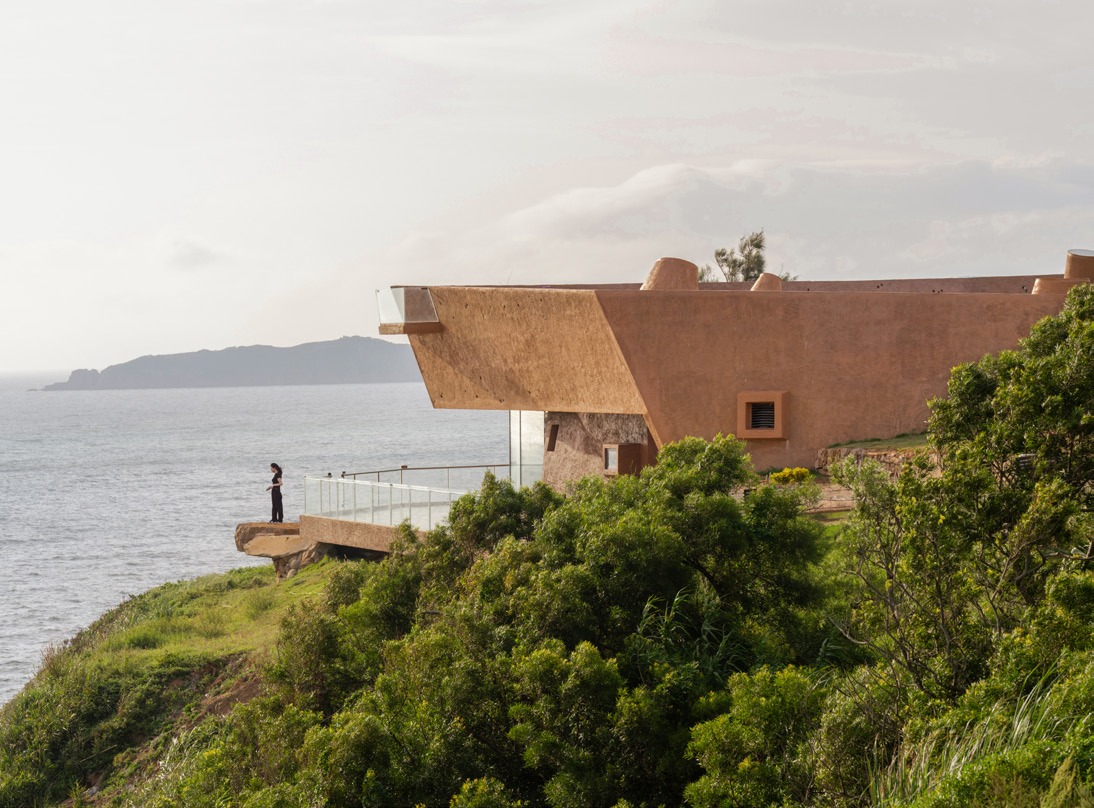
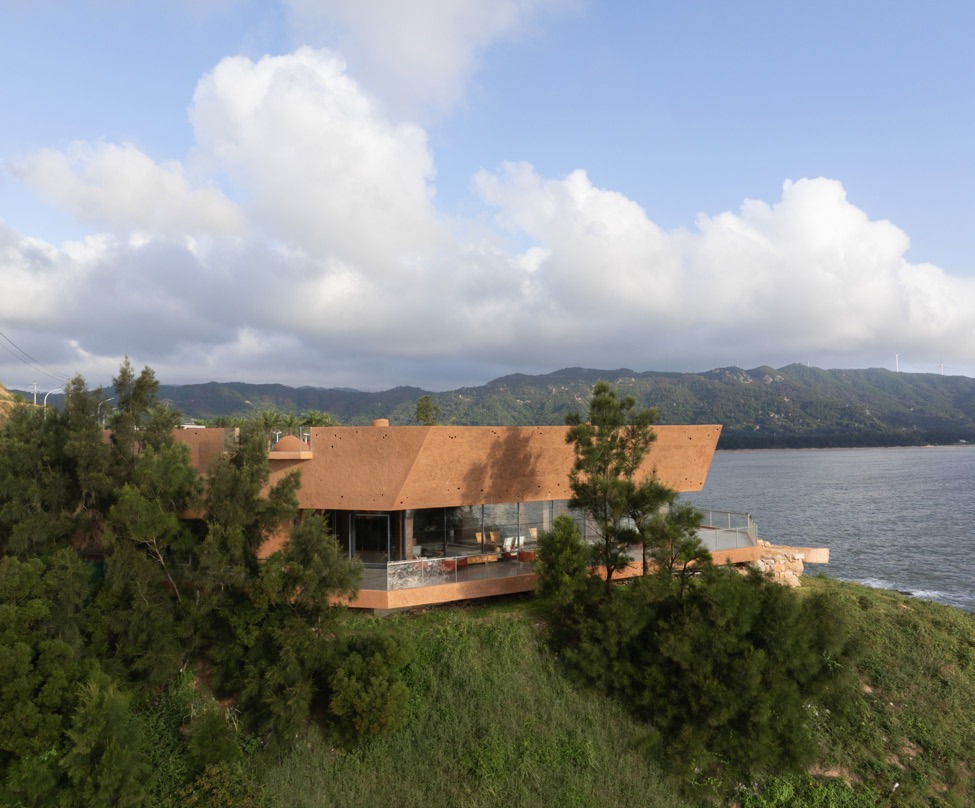
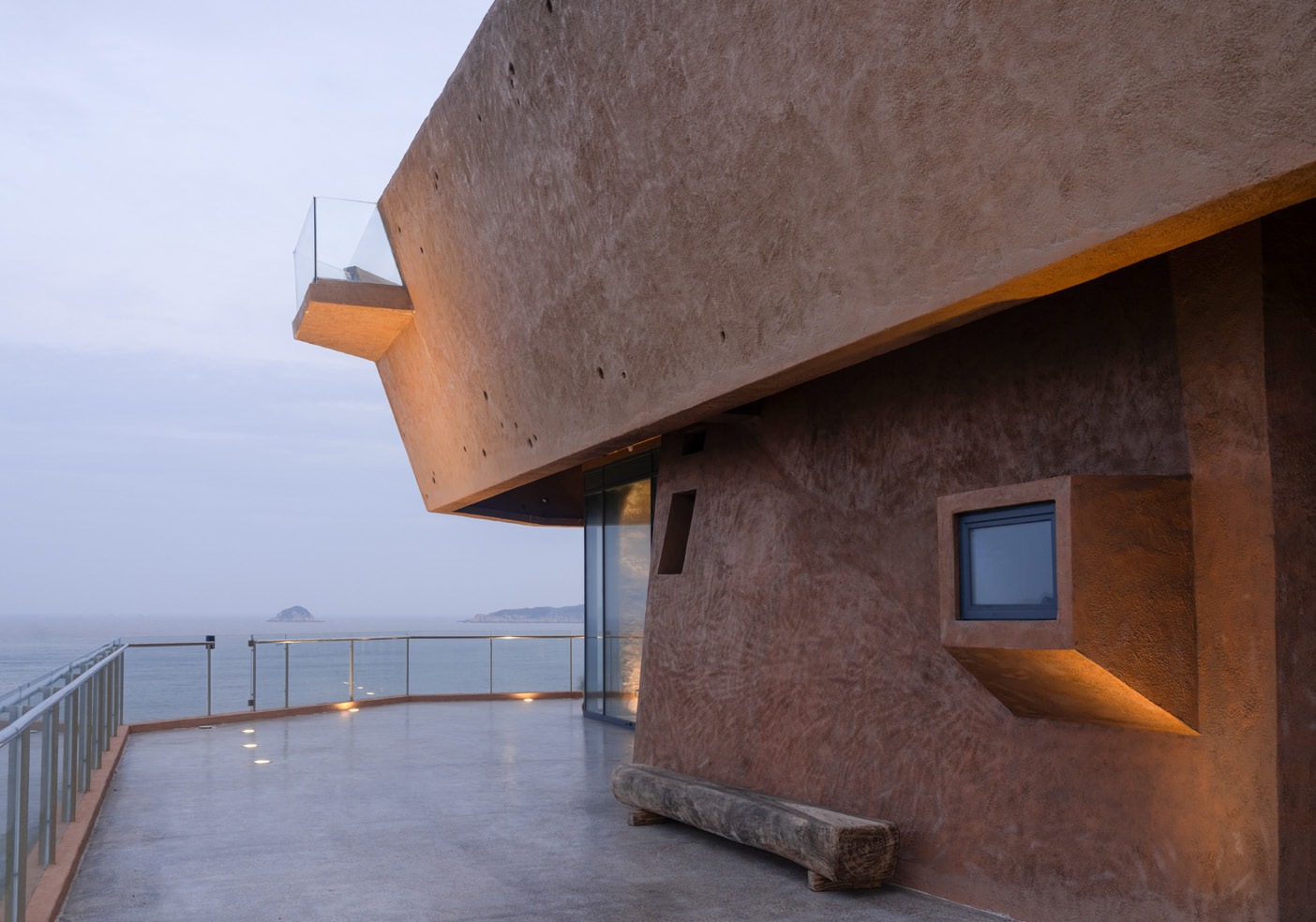
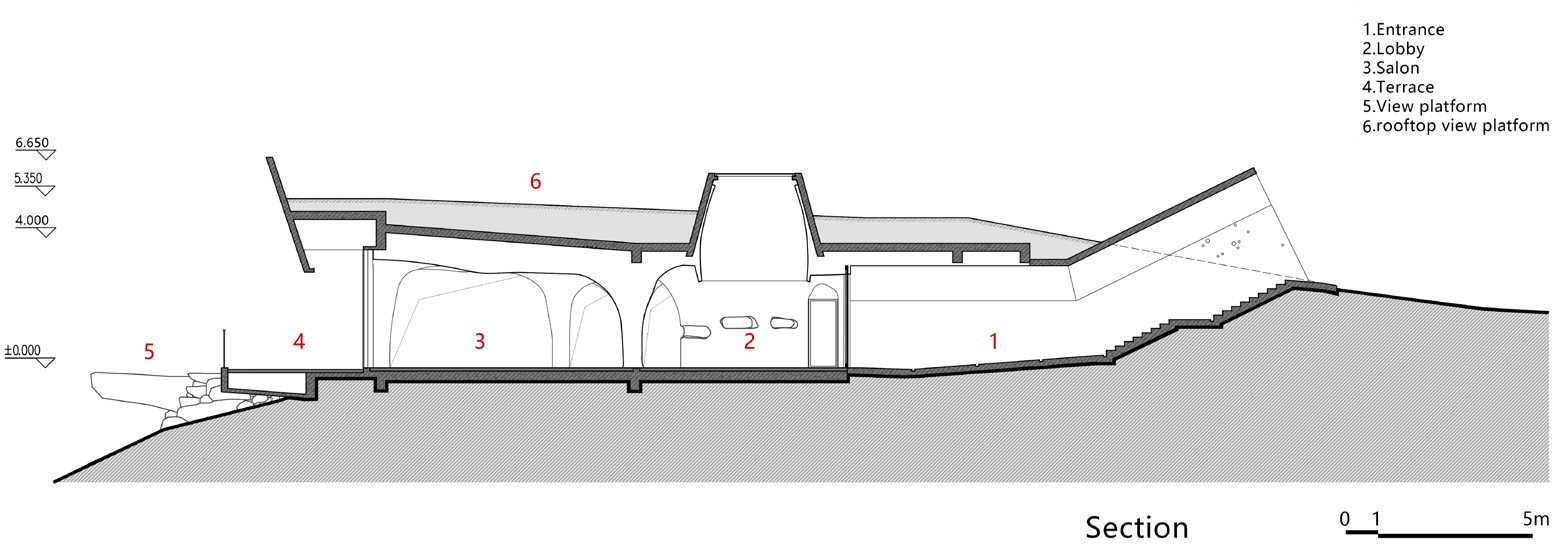
The architectural design emphasizes the relationship with the environment and also takes into account the concept of low-carbon and energy-saving. The design inspiration comes from the reefs and sea caves around the site. The building has an irregular shape, and the non-right-angled shape reminds people of the reefs. The building adopts a soil covering form, which minimizes the occupation of land to the greatest extent possible. The main body of the building is hidden underground, which not only respects environmental factors but also maintains a relatively stable indoor temperature, reducing the energy consumption of cooling in summer.
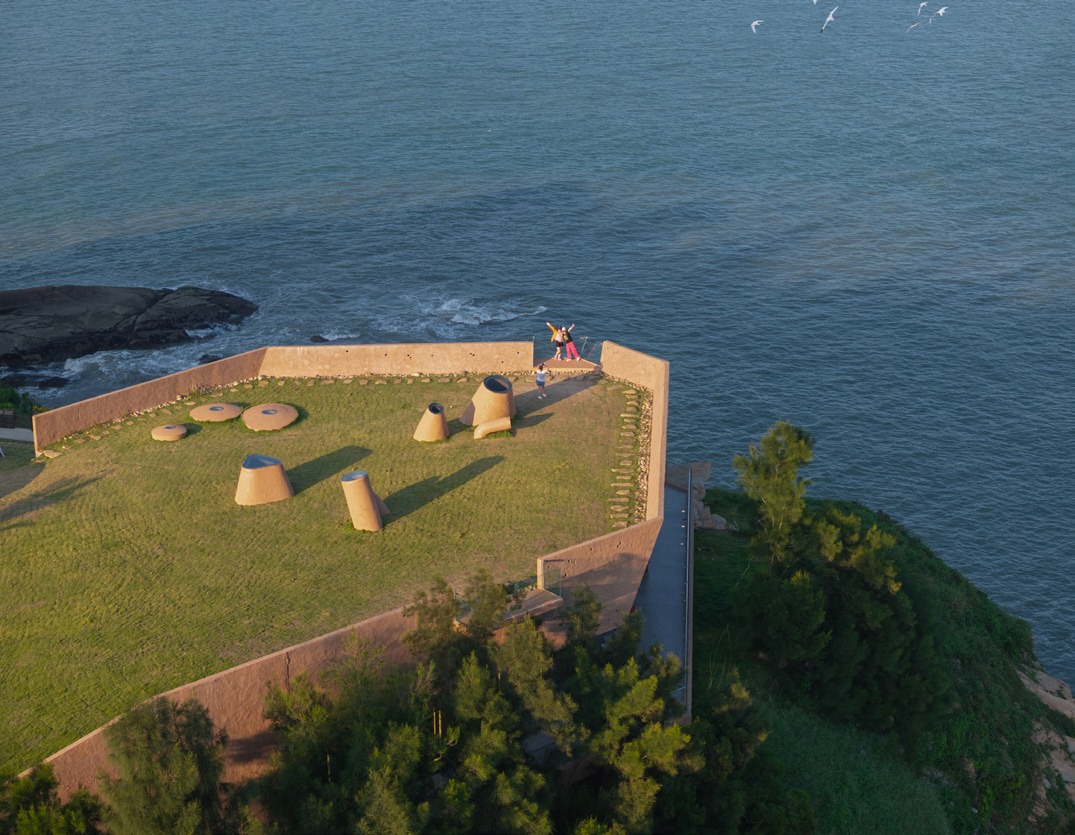
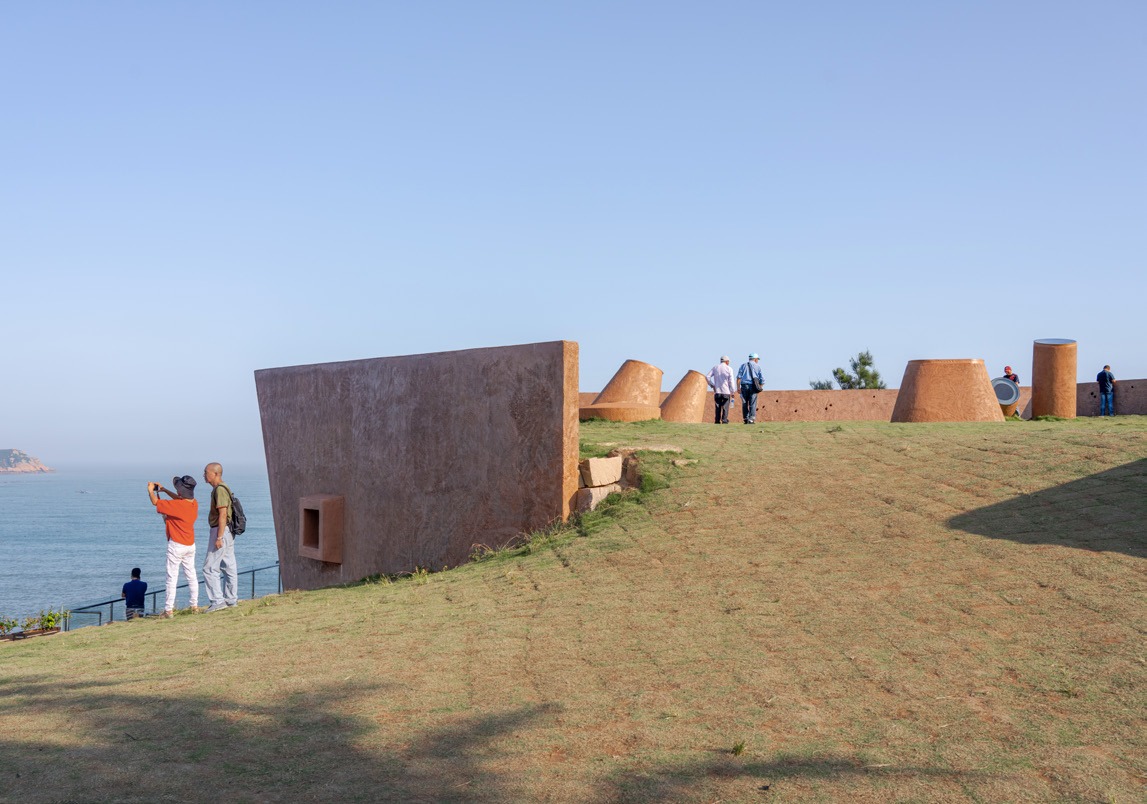
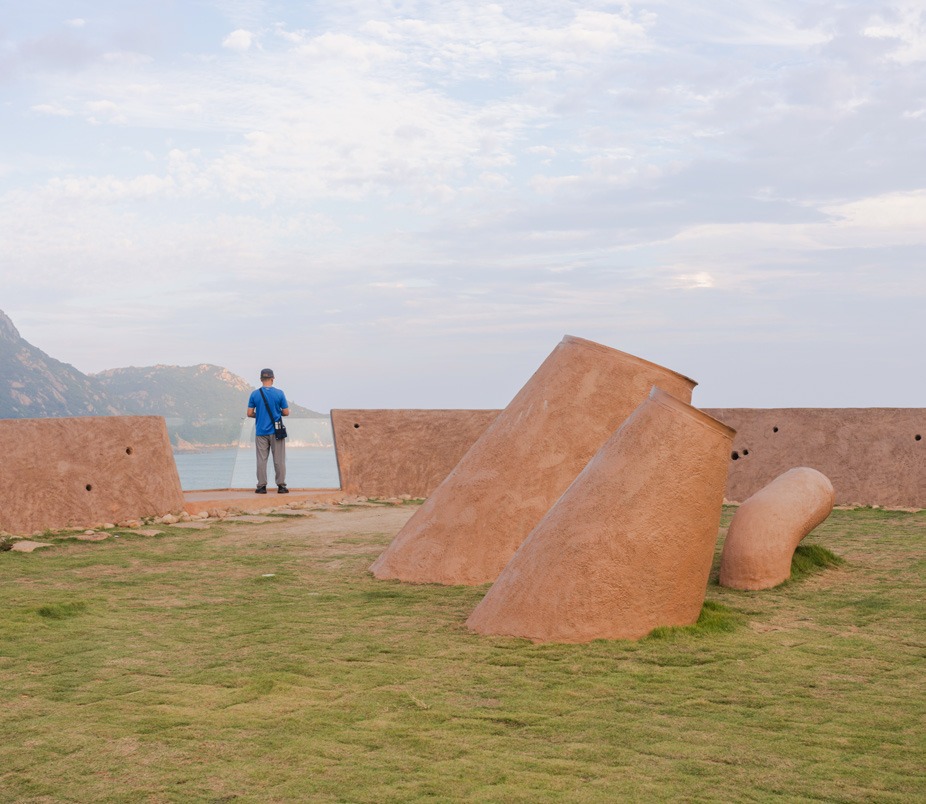
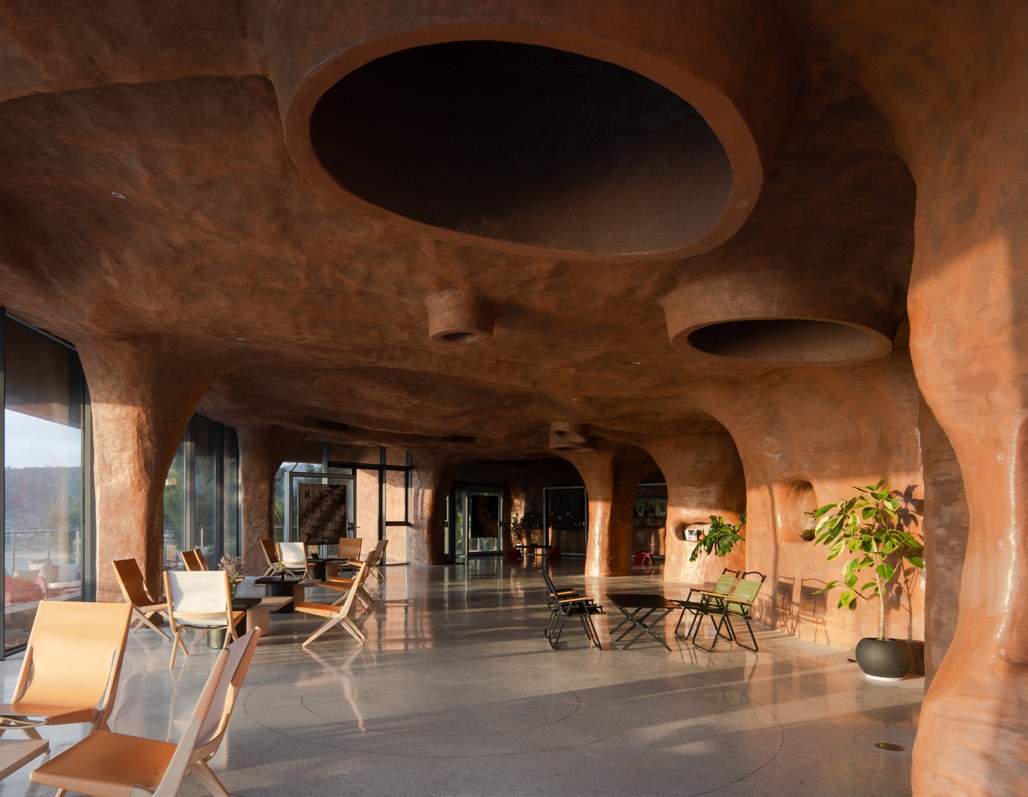
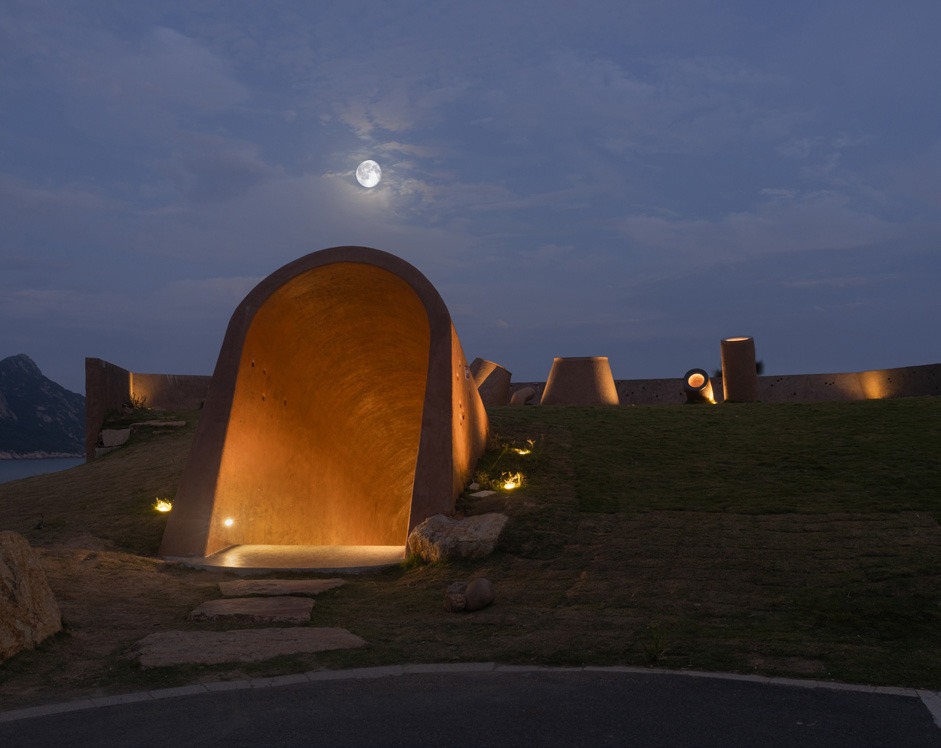
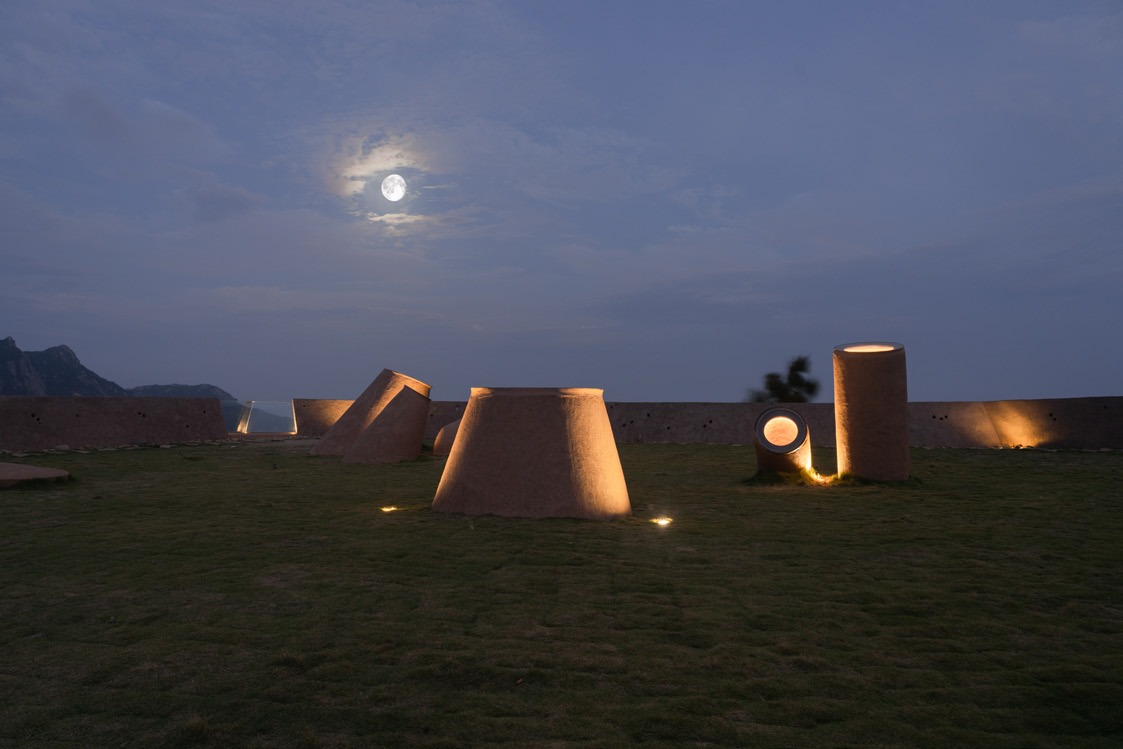
The roof of the building is also a viewing platform, and the covered soil and newly laid vegetation enable the building toachieve the concept of "zero land used". The roof has several uniquely shaped ventilation and lighting openings. Theirshapes imitate marine creatures in forms of fat circles, triangles, or long tubes, freely combined and distributed in the middle of the grassland. They can be used as installations on rooftop grasslands for tourists to play and take photos of, while ensuring indoor ventilation and lighting. The exterior of the building is designed in an irregular shape. By utilizing structural and functional openings (doors and windows), the wall presents a geometric cutting and combination relationship, accompanied by diferent angles of inclination of the walls, and the building looks like a moderately abstract reef. In order to create a more natural texture, the concrete is treated with roughening to give the building a more rock-like feel.
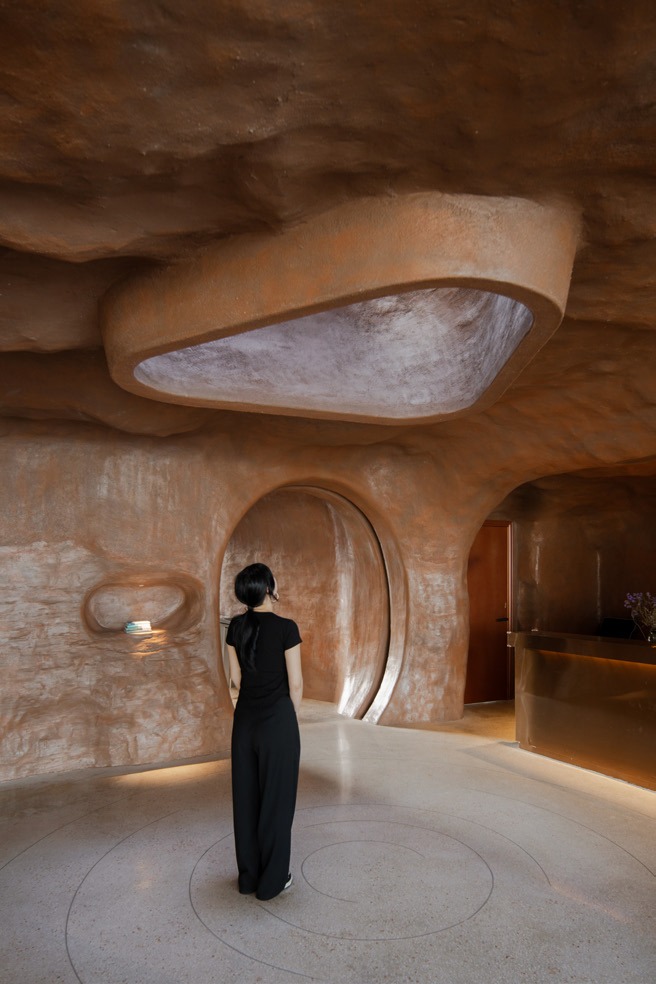
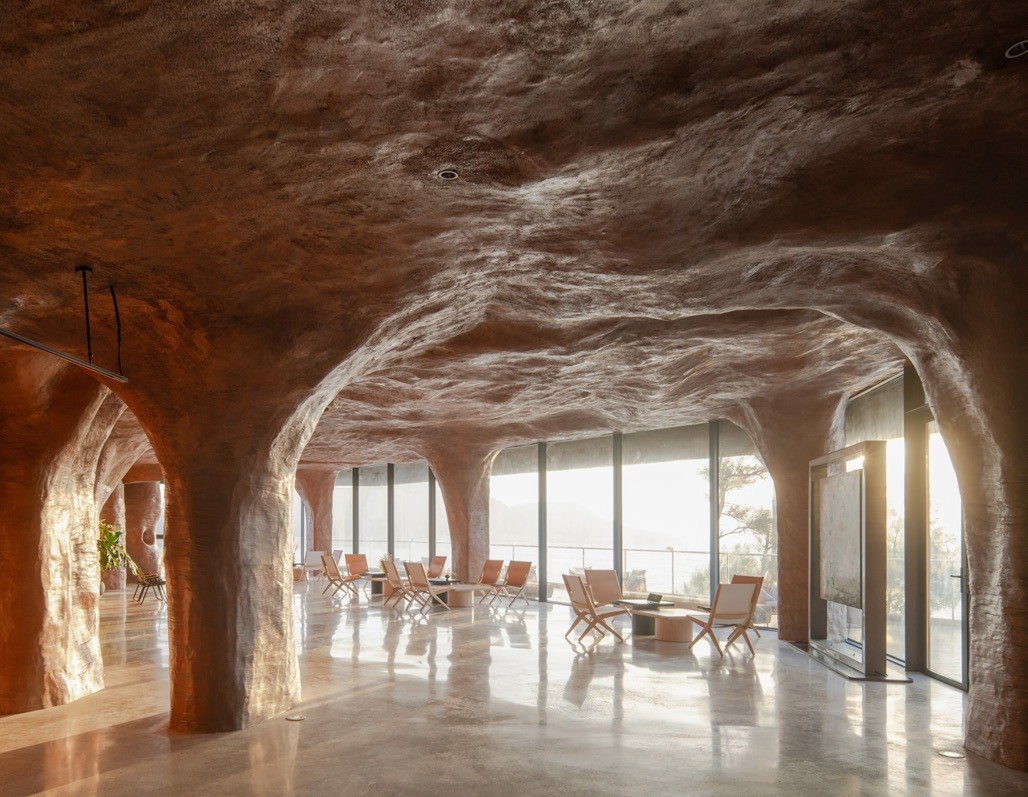
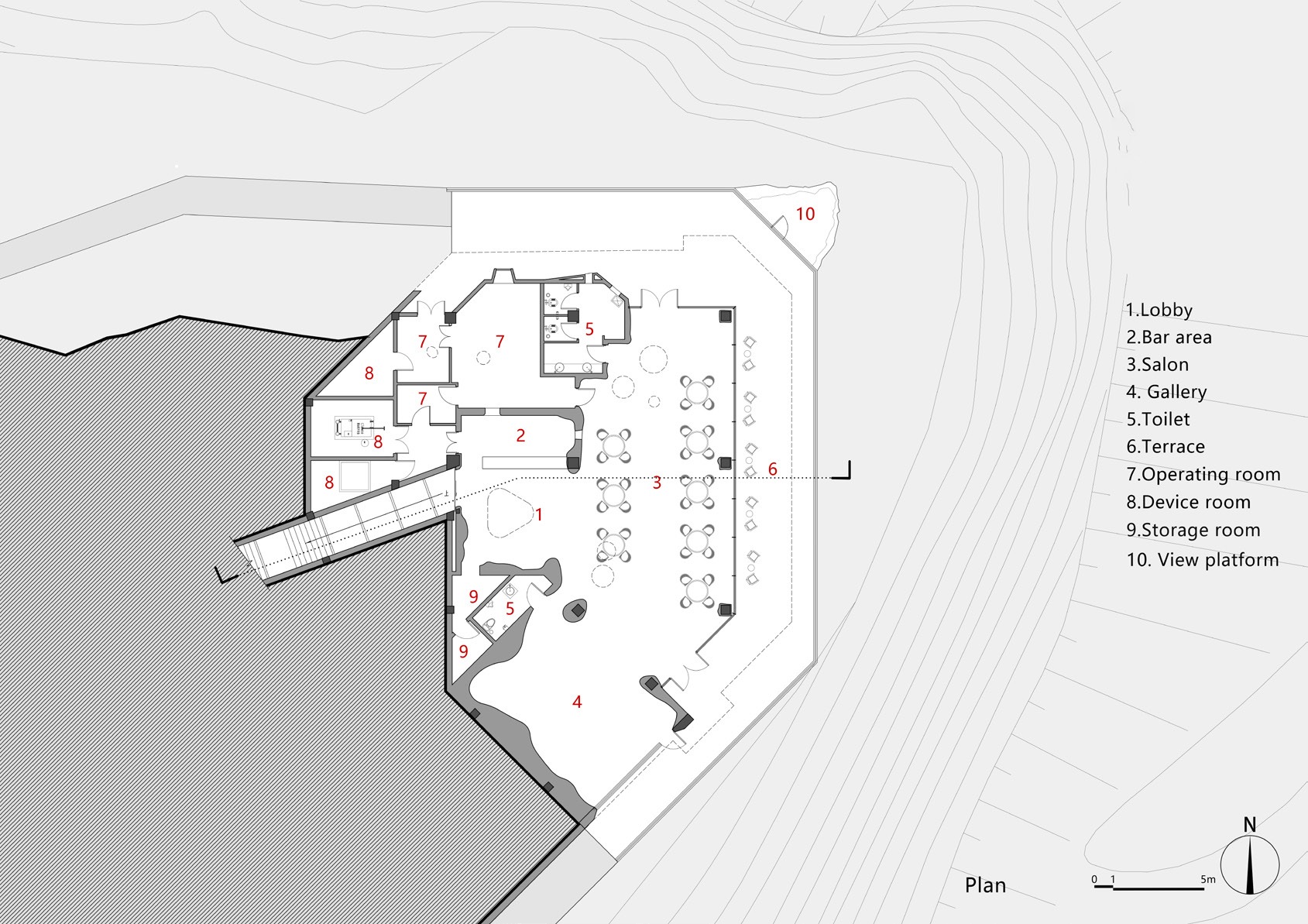
The main entrance of the building is located on the west side of the roof, with a semi-circular shape that extends from underground. From here, people can enter the interior of the building through the descending passage. The interior of the building is composed of multiple interconnected "cave" spaces. The architect drew inspiration from the surrounding sea-eroded landforms and created an organic and dramatic space through mimicry. The indoor space is divided into three areas: lobby, main space, and logistics space. The main space consists of two areas, salon and gallery, both located on the side of the building facing the sea, with a good view.
This place can host exhibitions, small gatherings, and provide catering services.The architectural lighting is restrained as much as possible, striving not to afect the surrounding environment and the activities of animals at night. Only low-power lighting fxtures are installed in important locations of the building (entrance, roof lighting pipes, and corners of exterior facades) to shape the building's form while ensuring a peaceful atmosphere.



 loading......