
Architecture Firm: RDC Architects Pte Ltd
Lead Architect: Rita Soh Siow Lan
Year of Completion: 2024
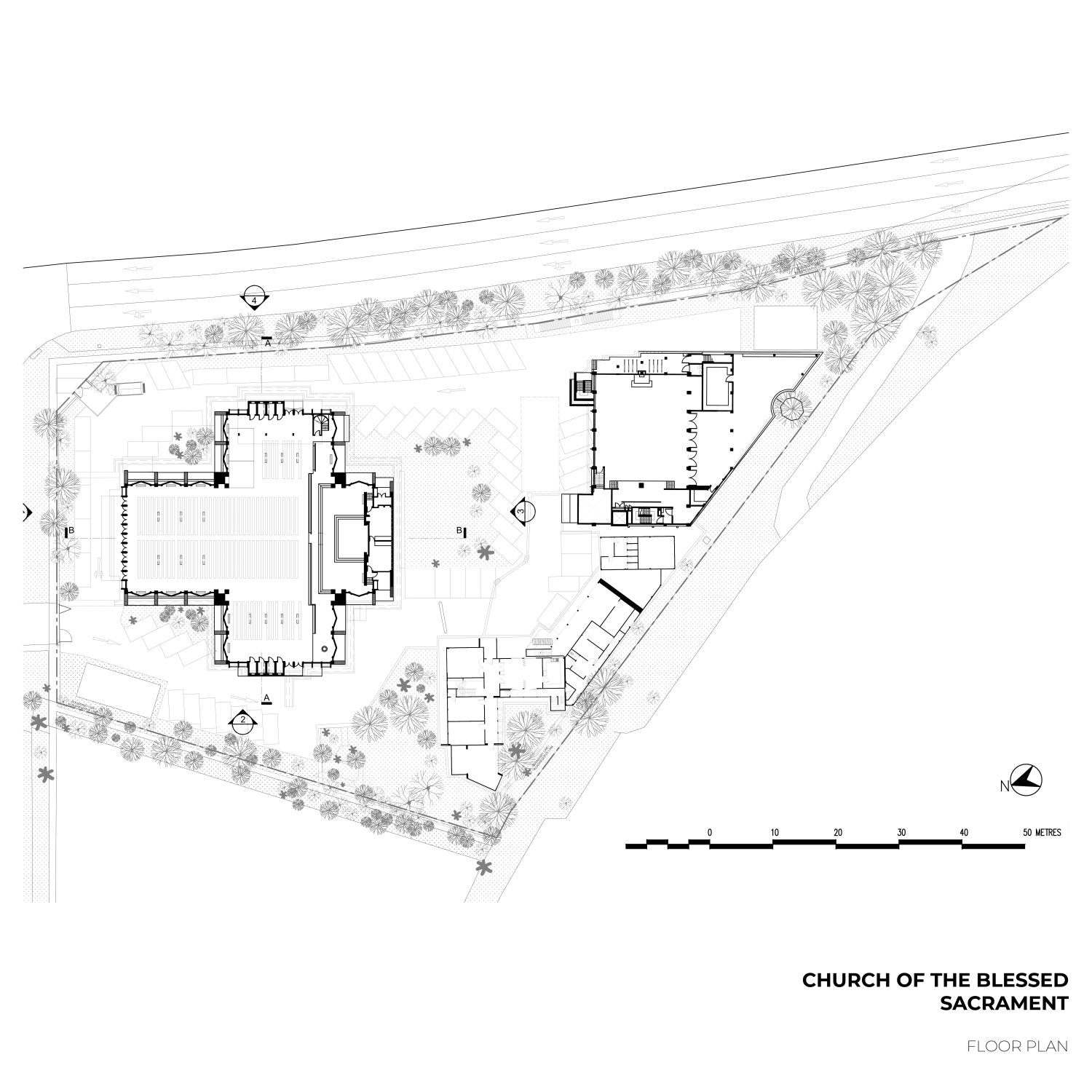
Land Area: 7505 sq.m
Built-Up Area: 1243 sq.m (Only the Church Area)
Photographer: Vernon Leow
Summary
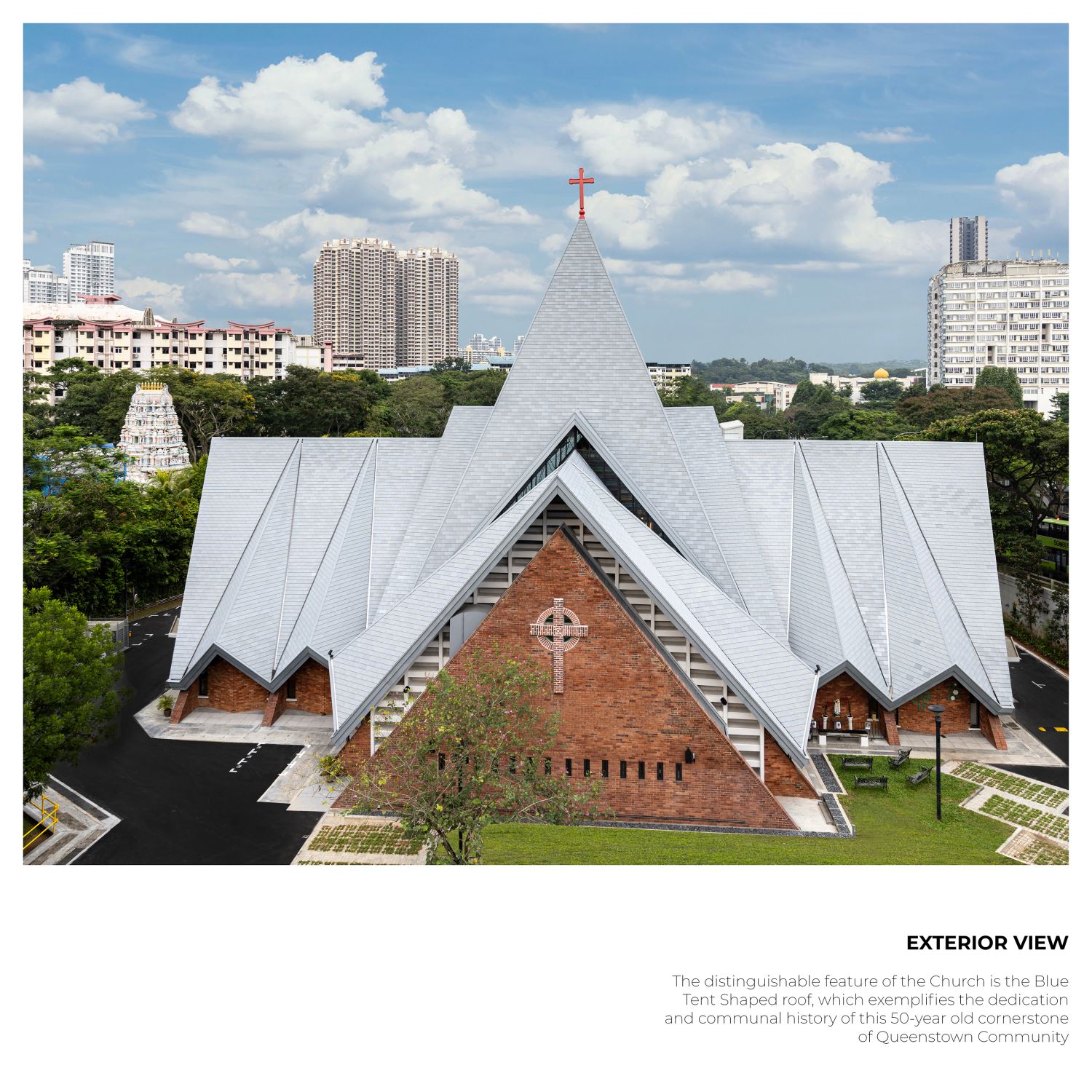
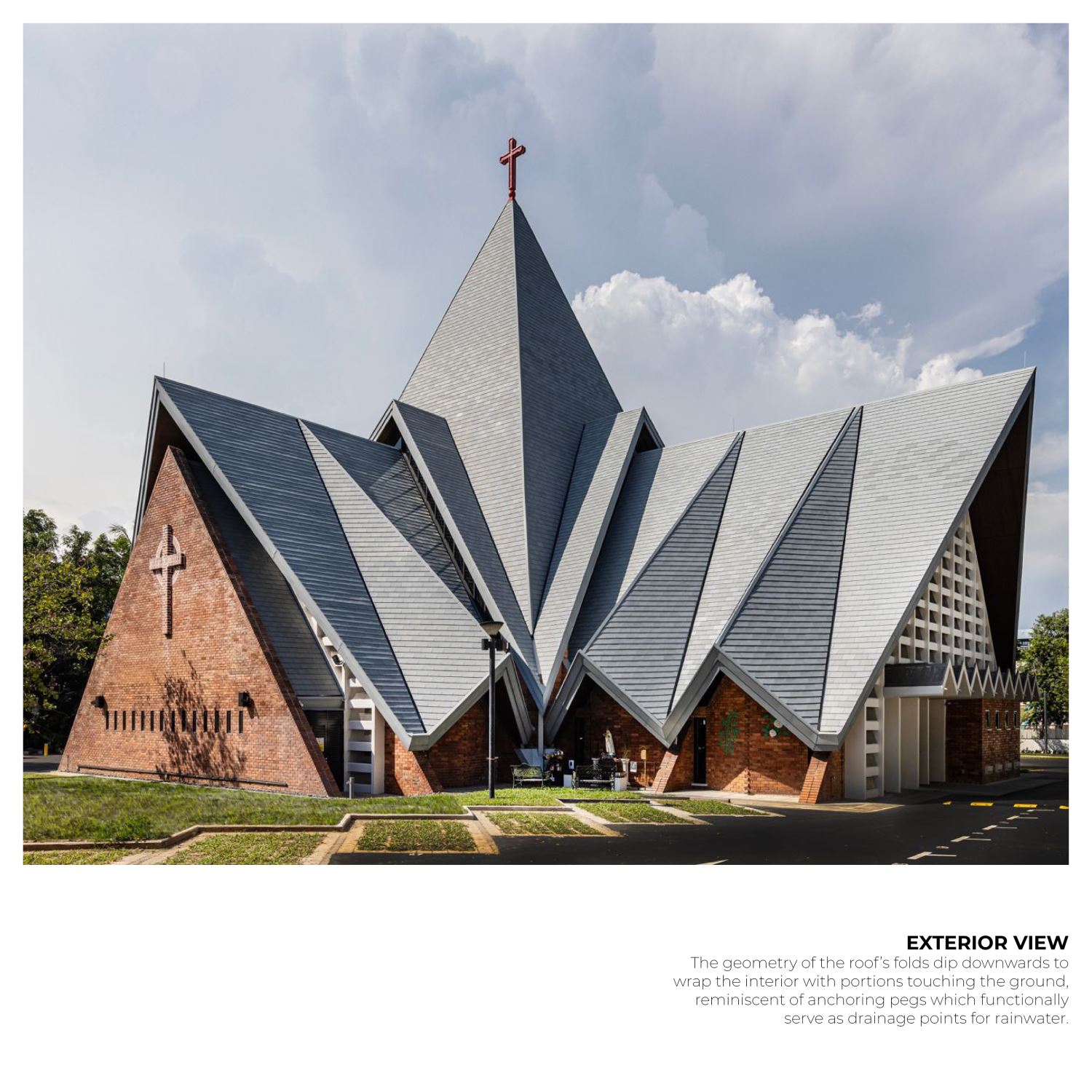
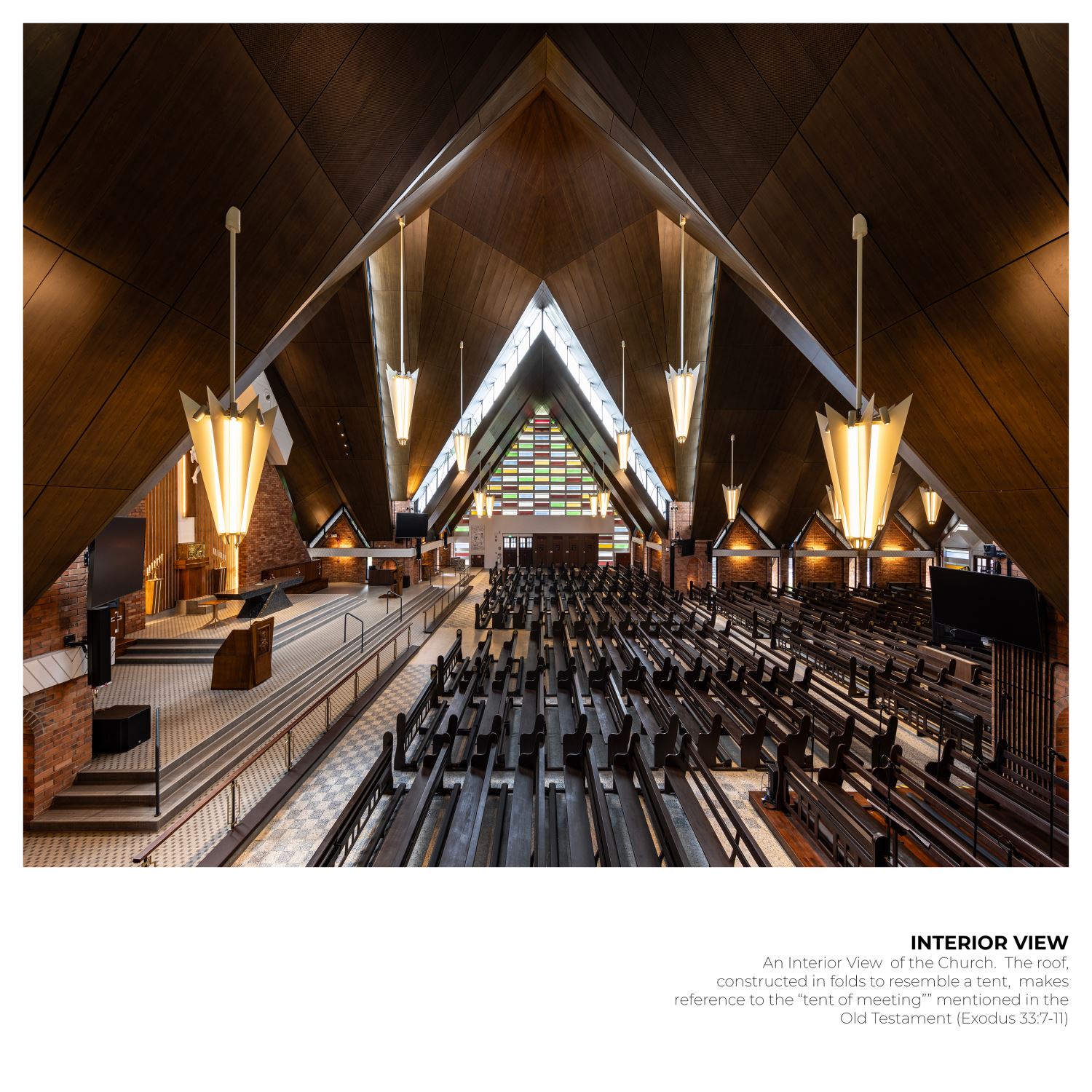
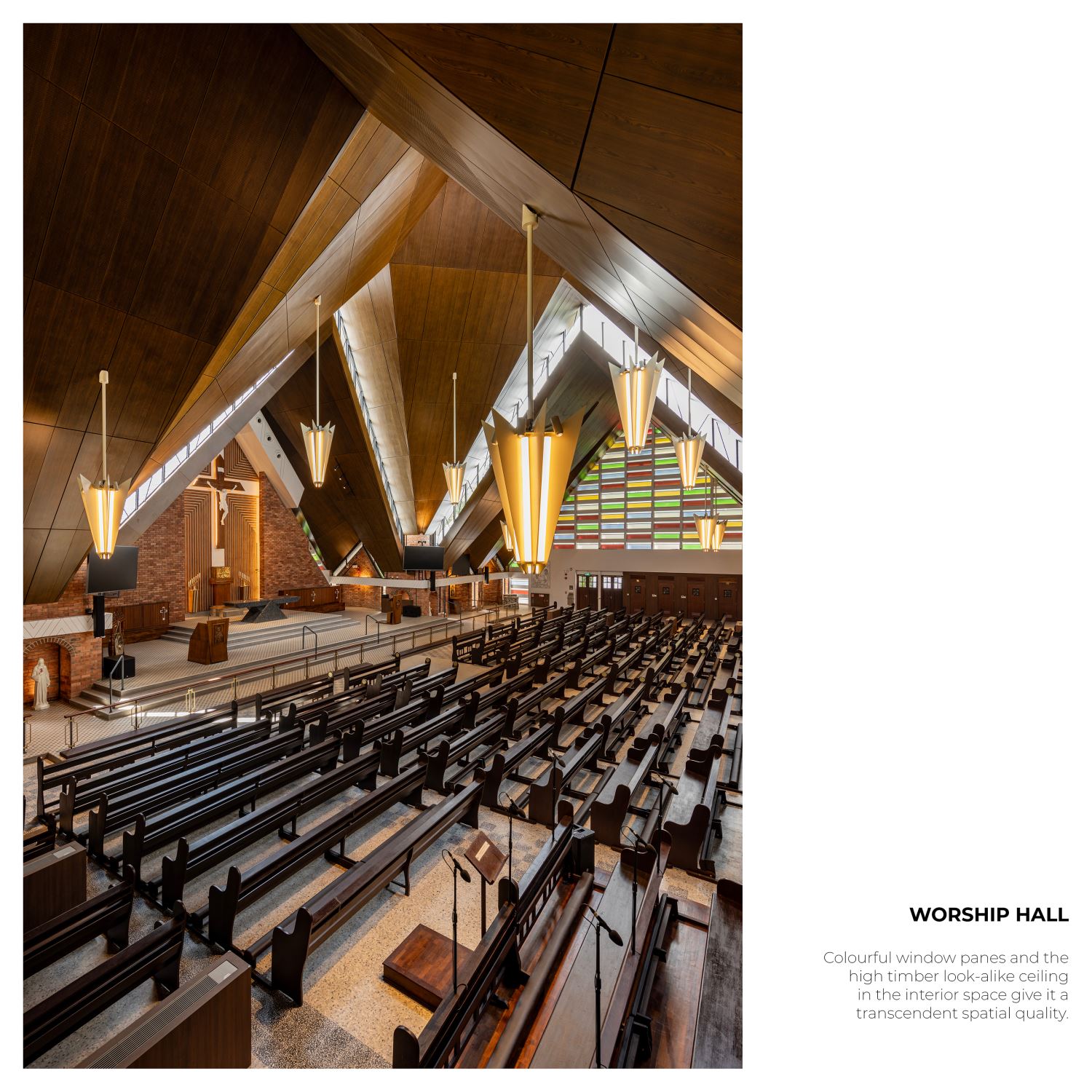
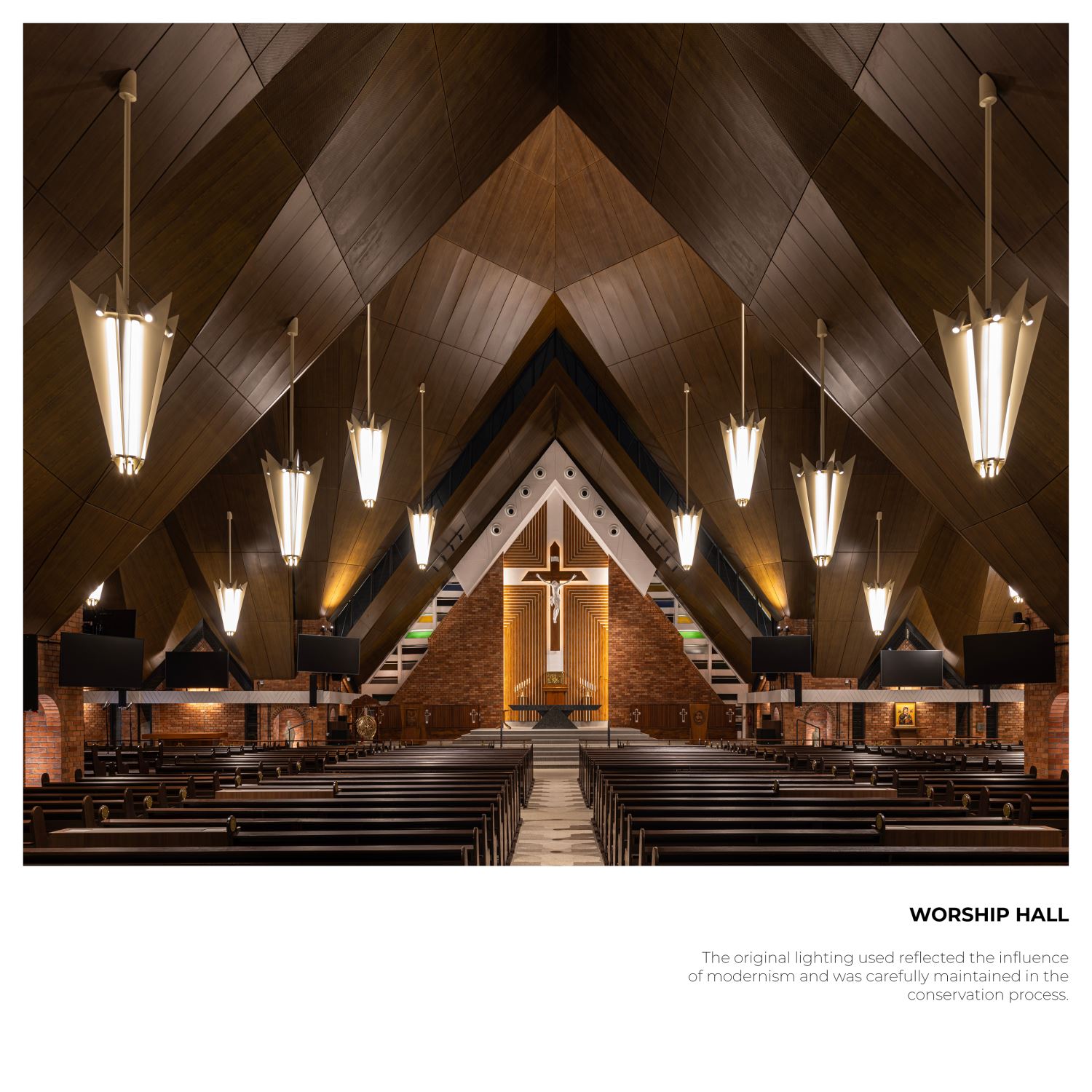
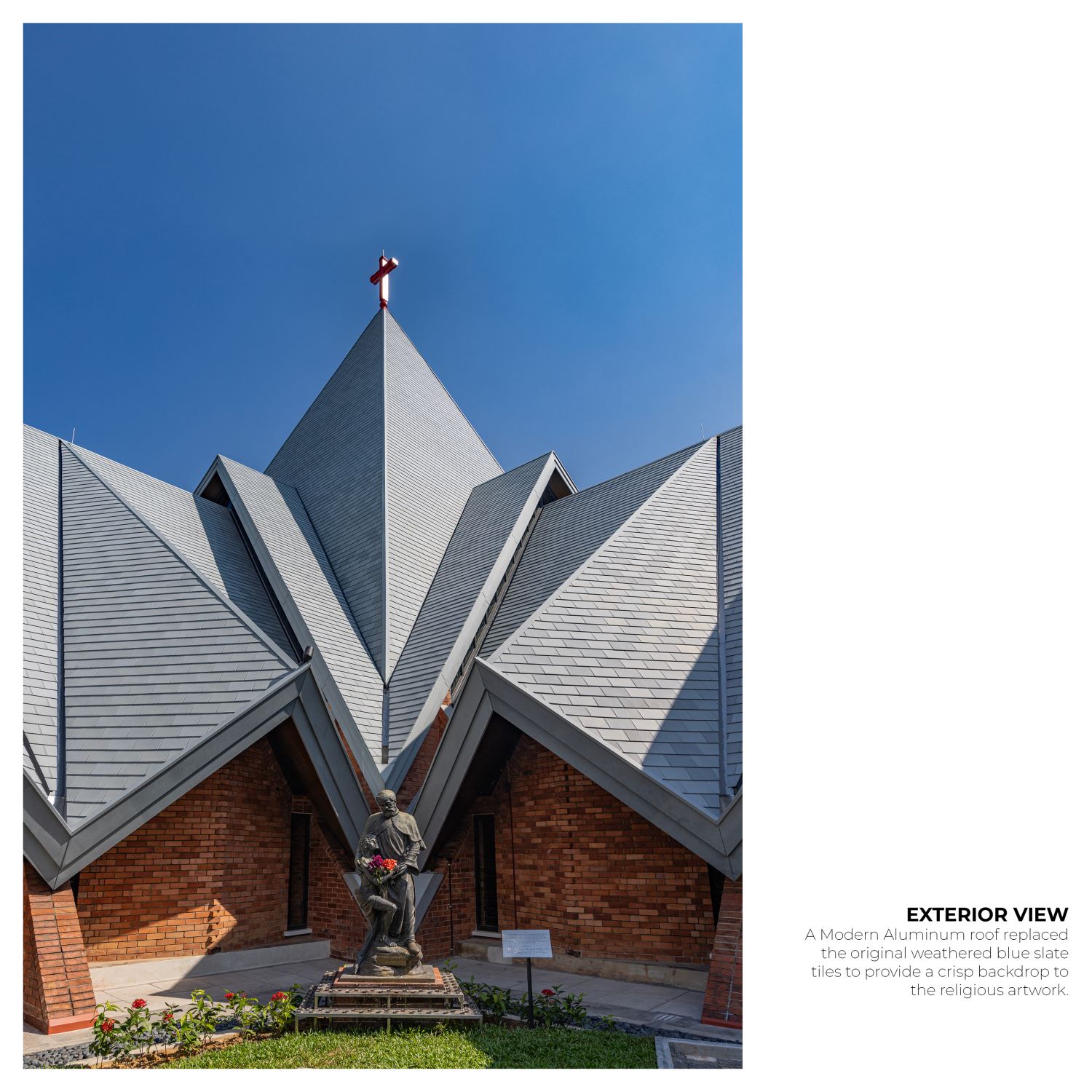
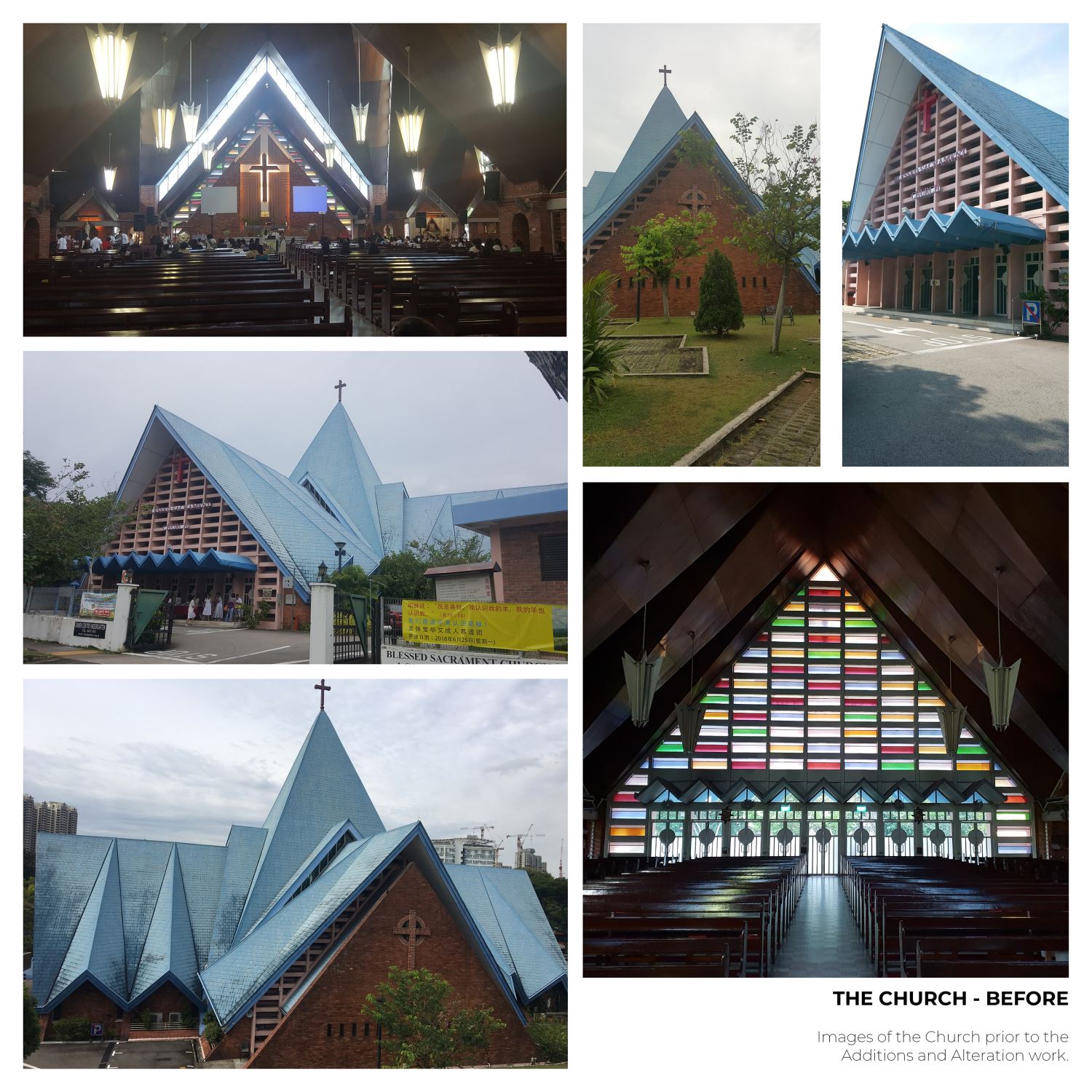
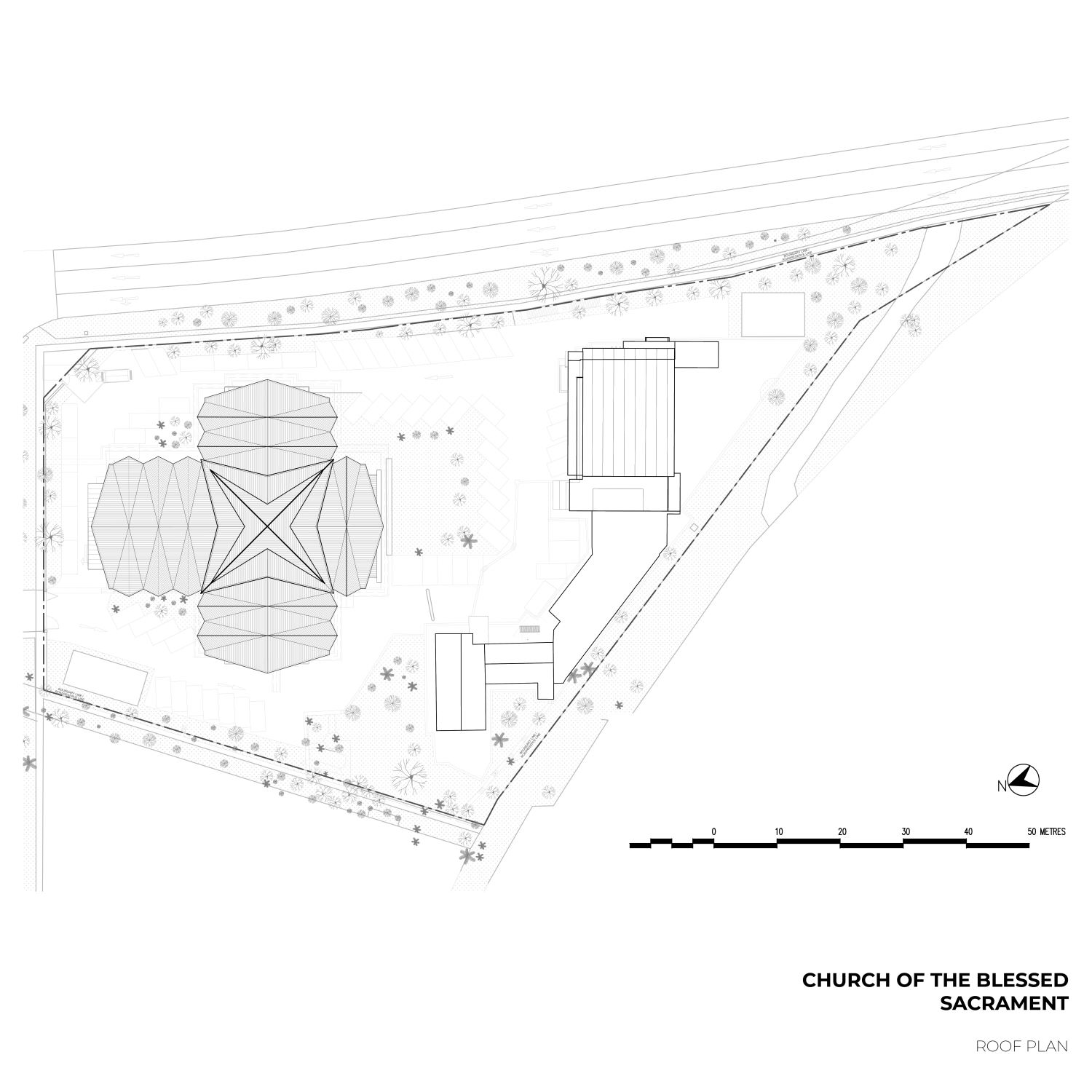
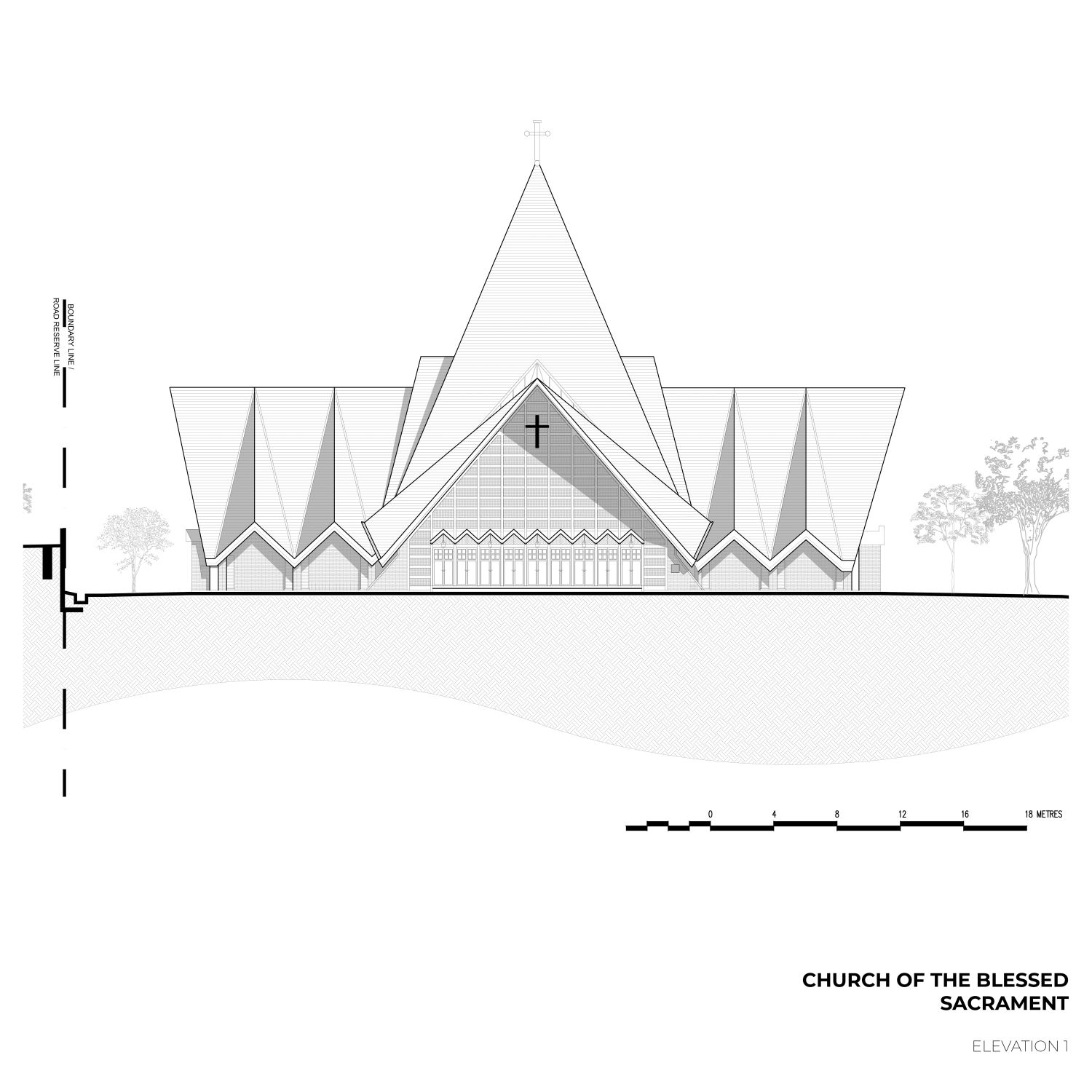
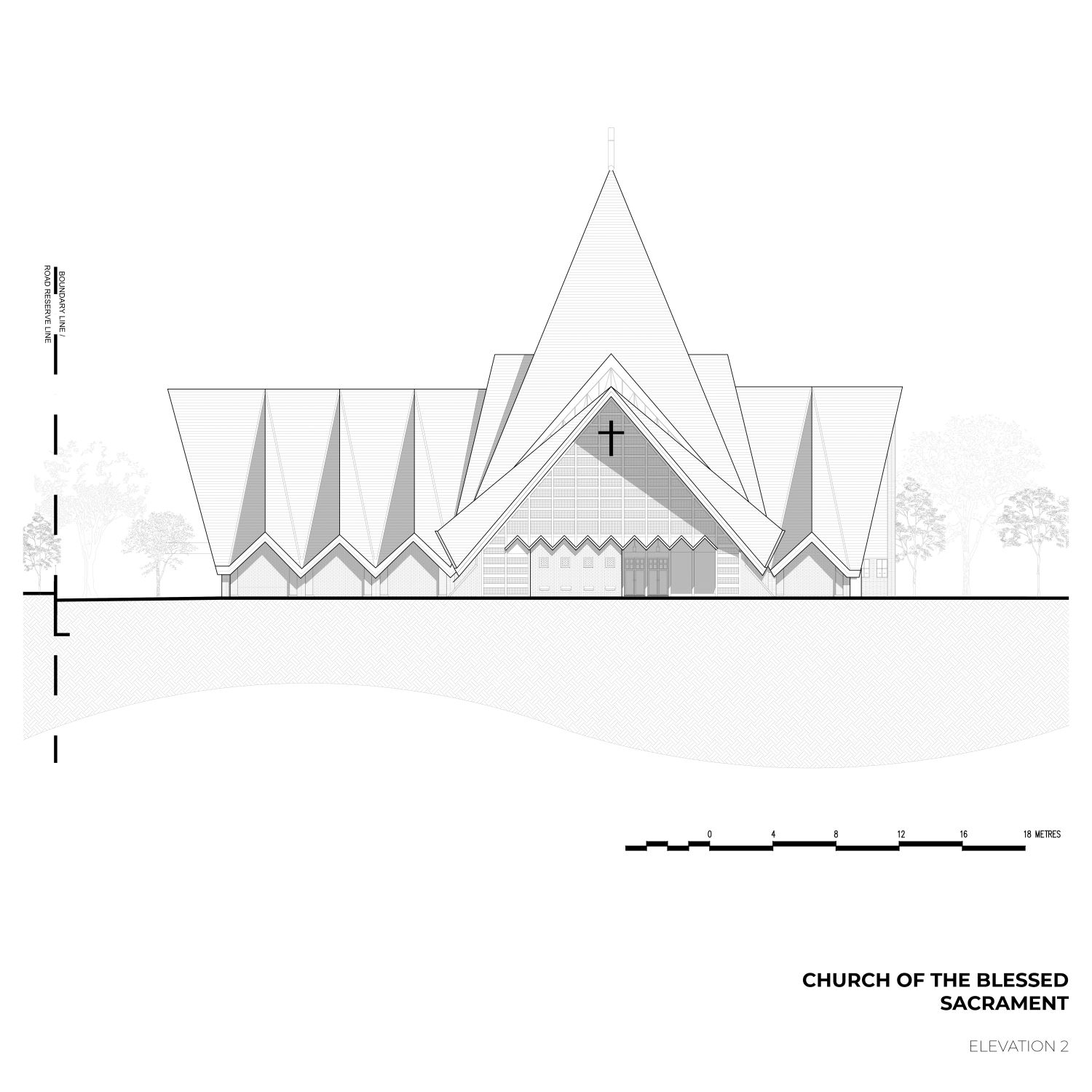
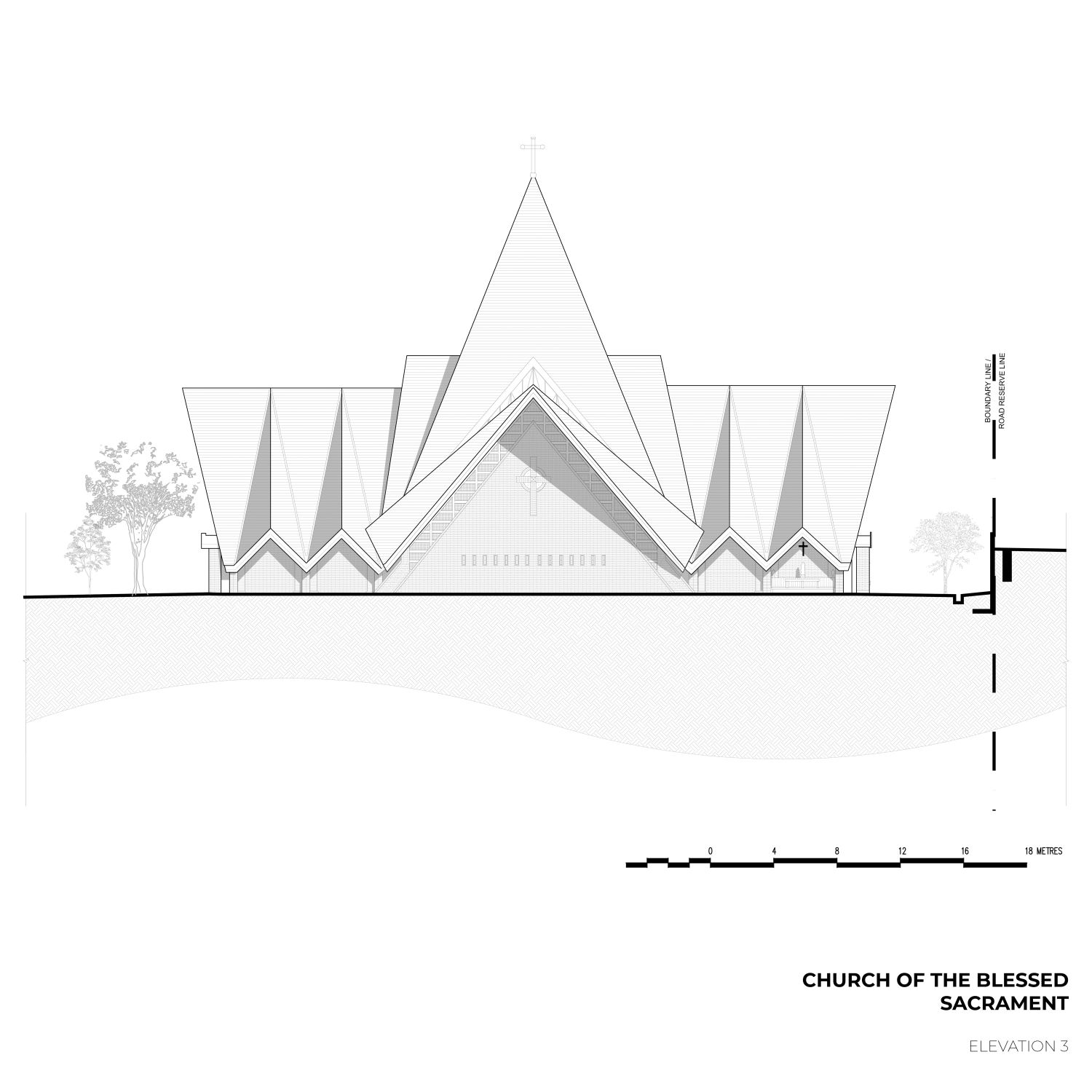
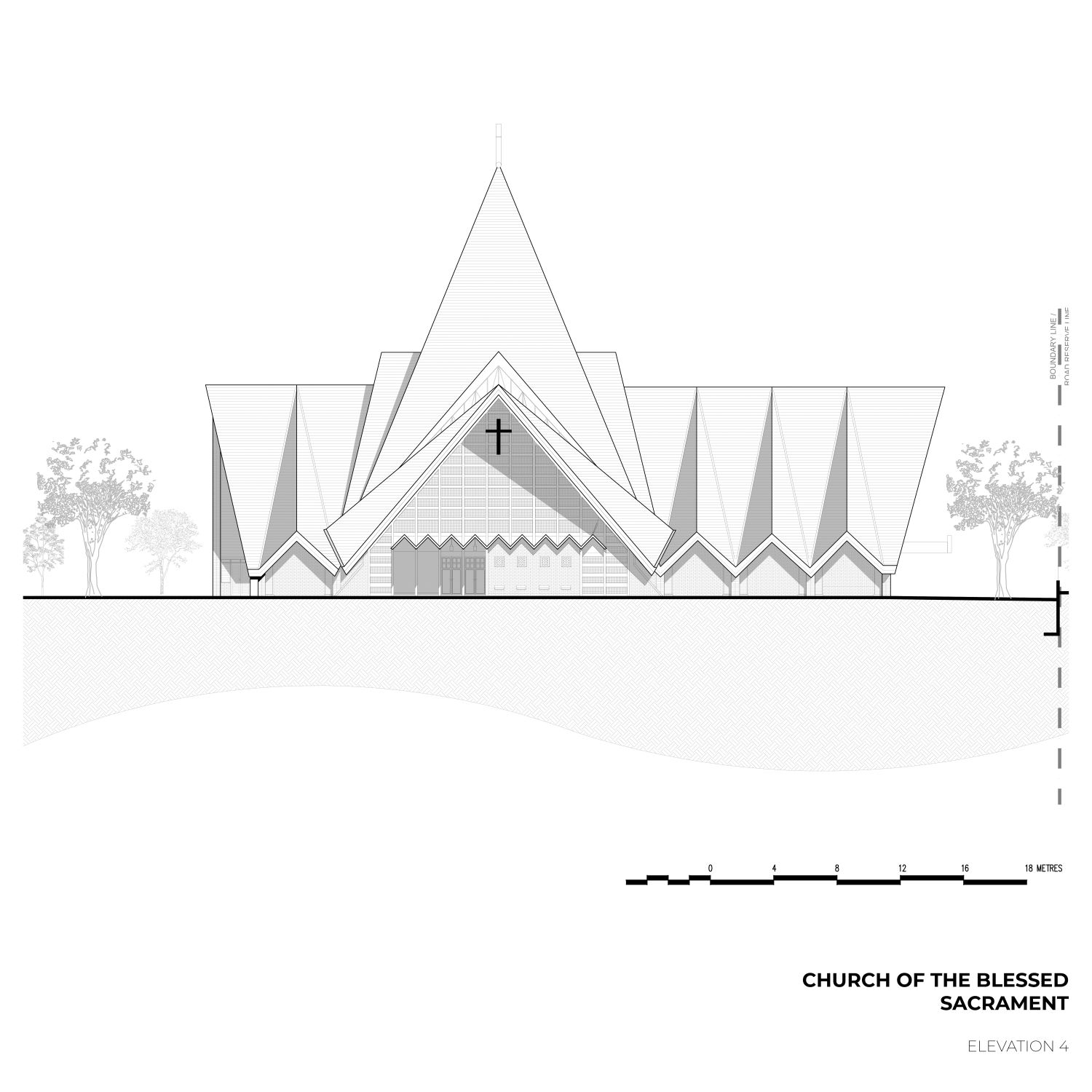
Blessed Sacrament Church (BSC) opened in 1965 by Archbishop Michael Olcomendy, Iversen & Van Sitteren Partners as the Architects. In 2005, URA gave it Conservation Status, its folded Roof Structure, a unique feature over its interiors, creates a transcendent spatial quality. Restoration of the church and interiors took place between 2021 and 2023.
Description
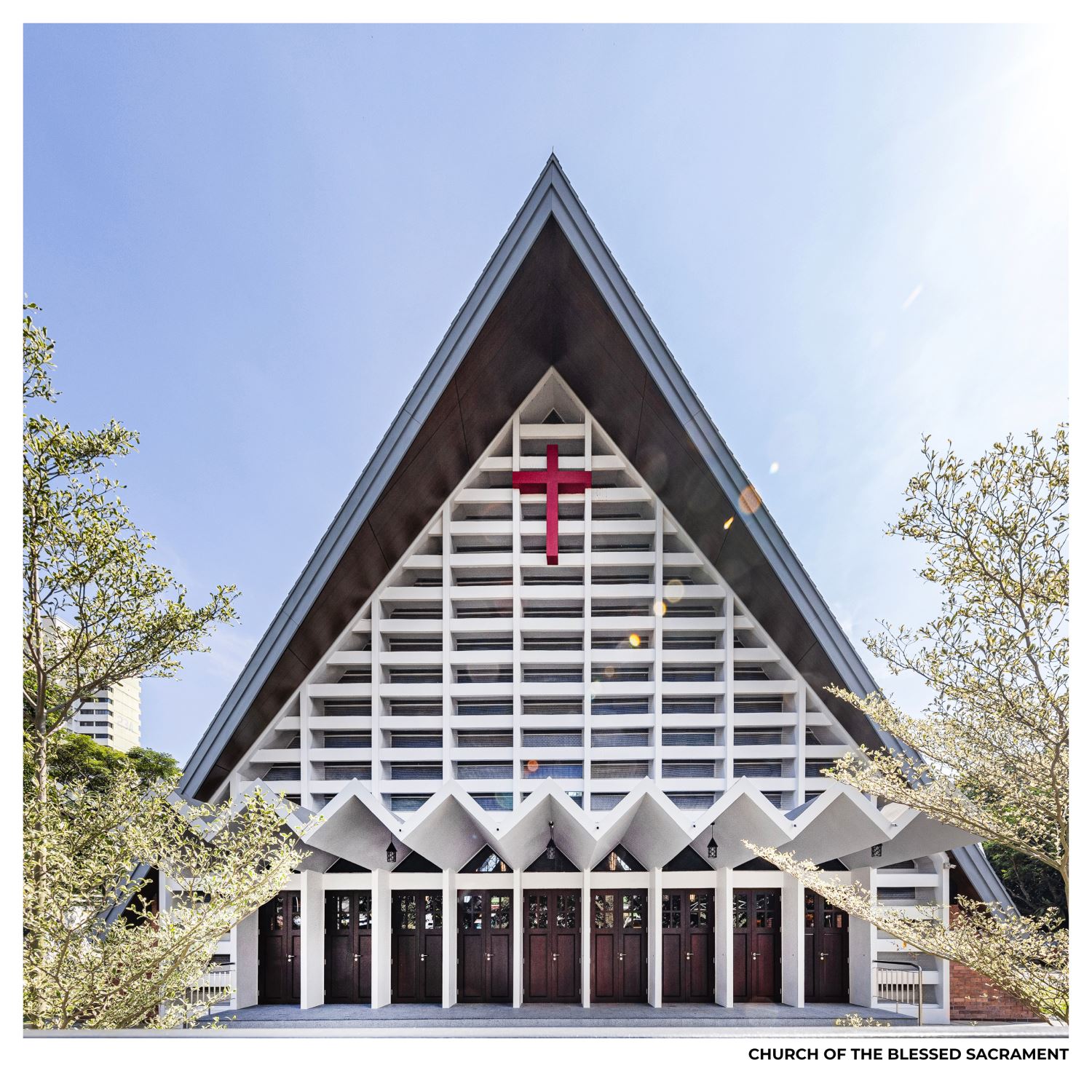
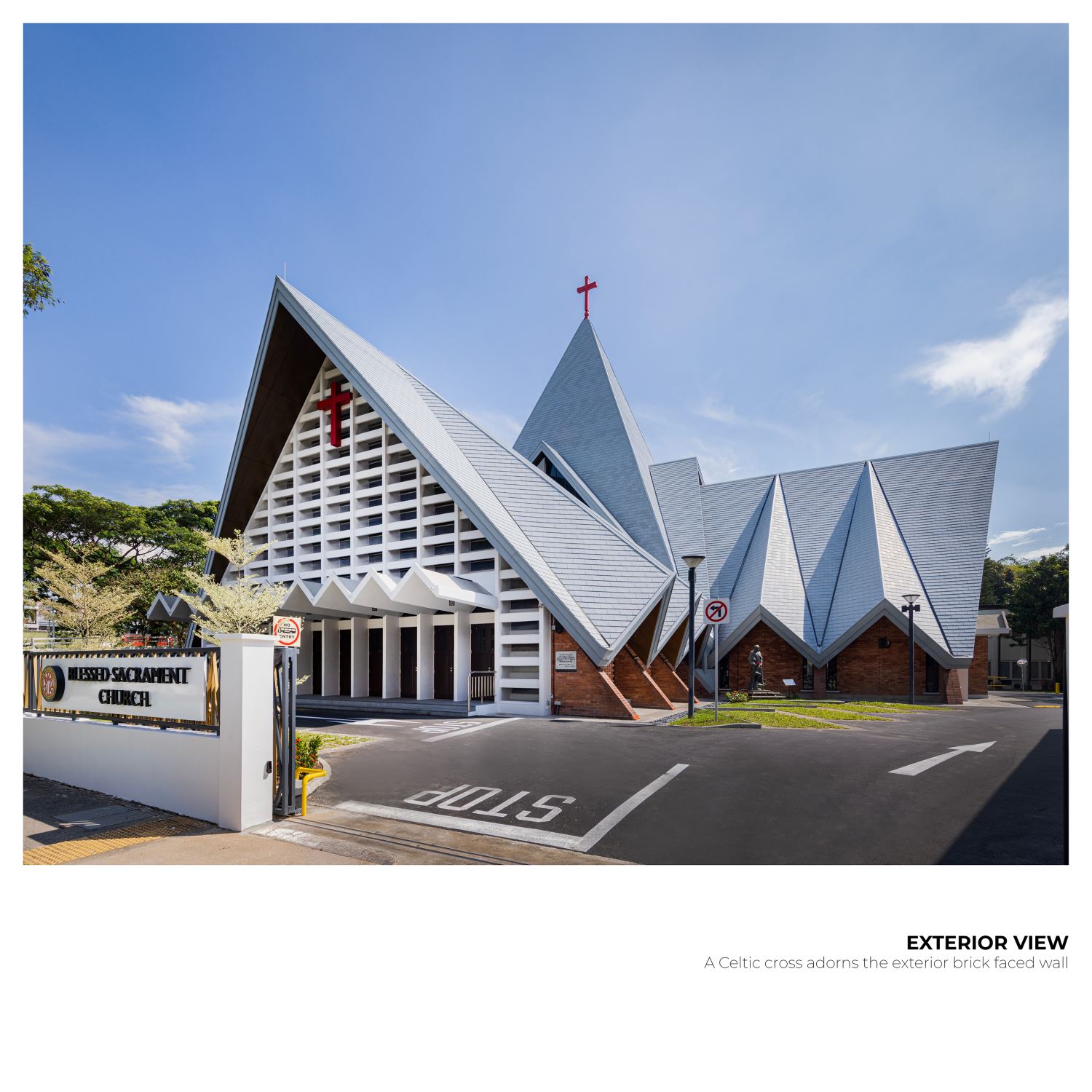
Designed by G.Dowsett, its signifcant feature was a folded roof constructed to resemble the Tabernacle in Exodus 33:7-11. The Church was granted Conservation Status in 2005.
The architects were tasked to address the building’s deterioration and to improve accessibility for the development. On the award, we discovered asbestos mineral fbers in the roof slate, which saw the need to replace it with new materials. Given weathering, water leakages and prolonged dampness in the facade caused damaged plaster and painting discoloration. Internally, lighting & mechanical equipment upgrades and sustainable ACMV systems, better acoustics performance, and improved Audio-Visual systems are required.
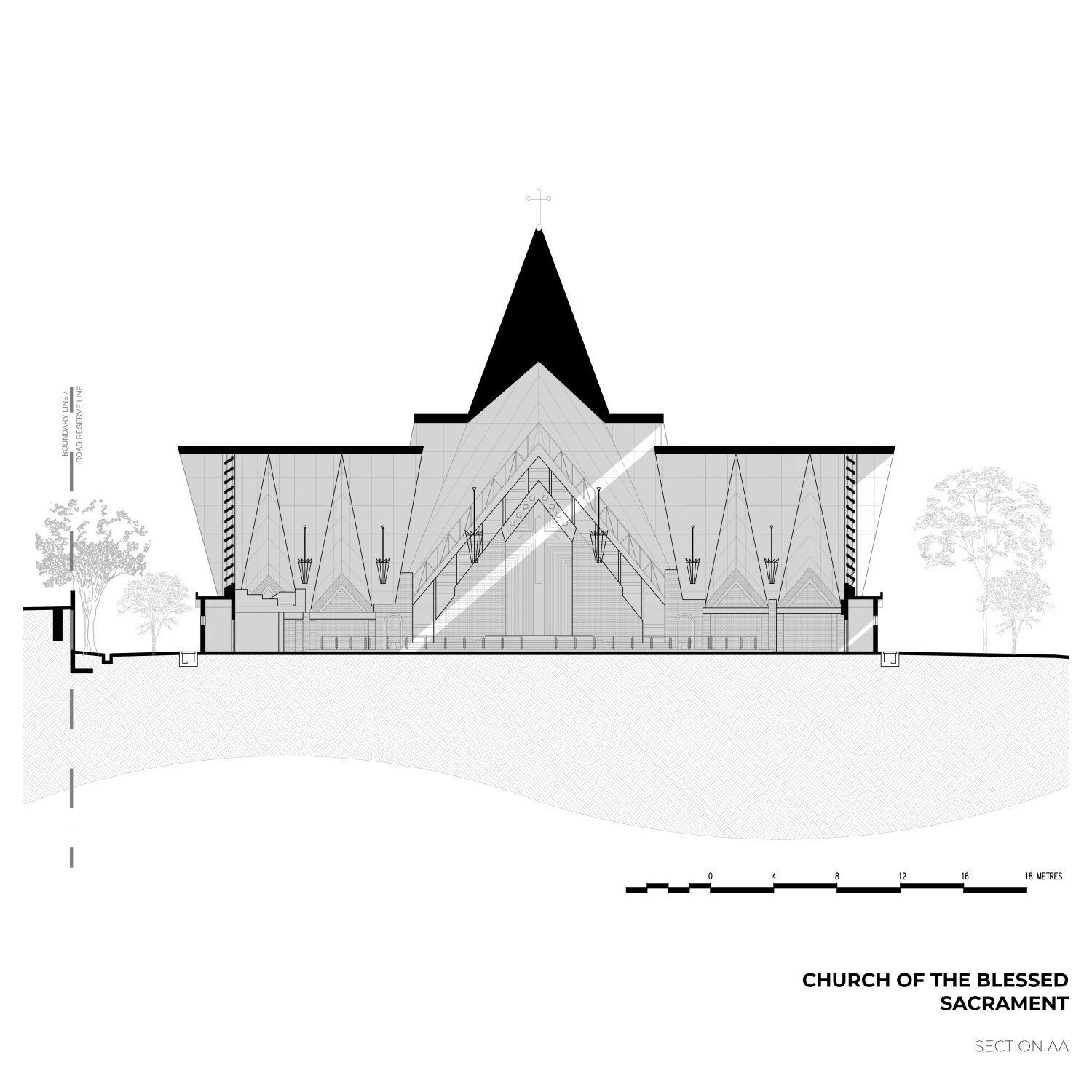
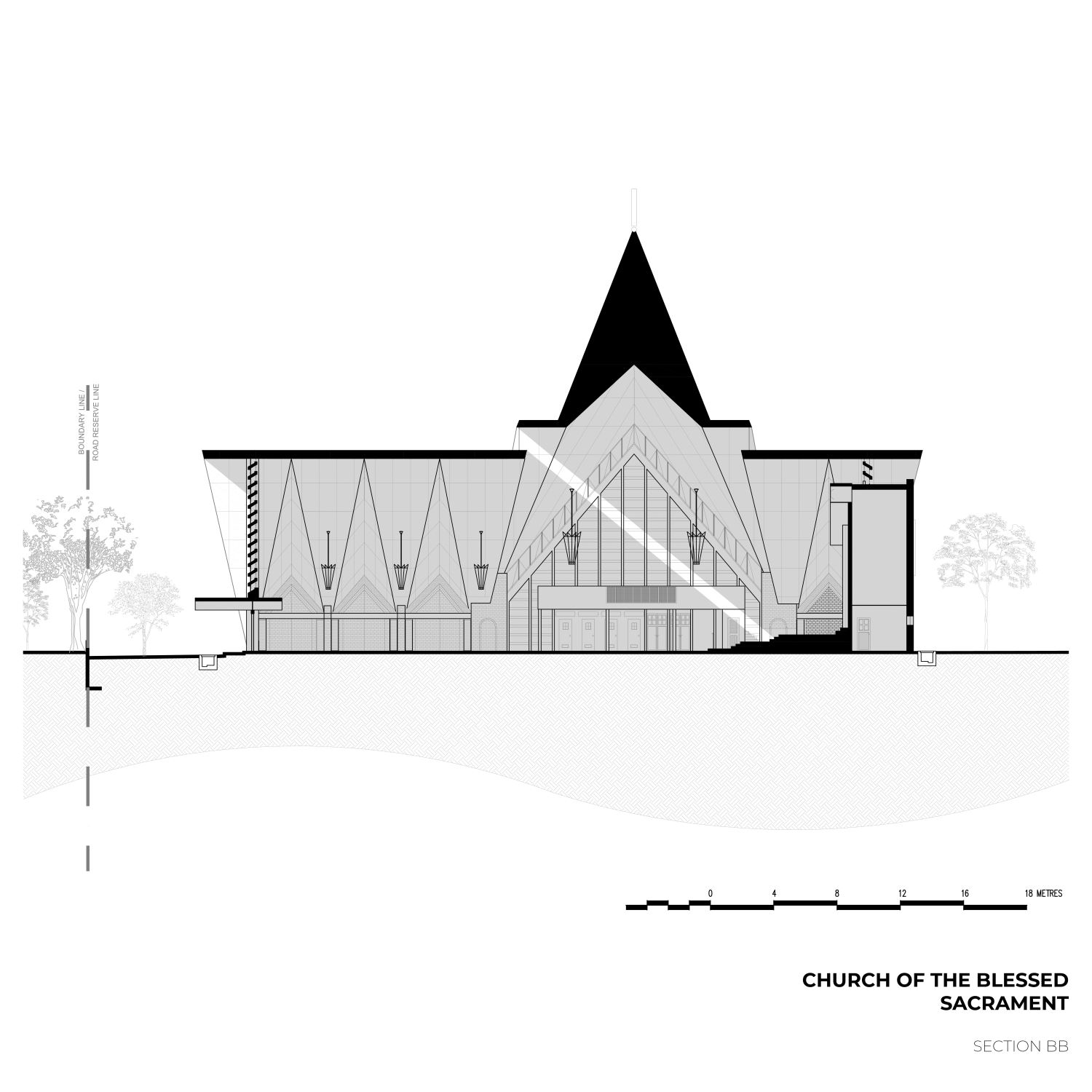
The entire roof, early 3-dimensional steel-truss frames rested on 4 main groups of brick piers with no detailed drawings save for the load/m2, meant a new challenge as the roof structure was interconnected, and any replacement needed careful strategizing to avoid a total collapse. Existing timber ceiling timber boards had deteriorated. While it needs to be restored, the current fre code would require fre-rating, hence it means additional load on the fimsy steel trusses.
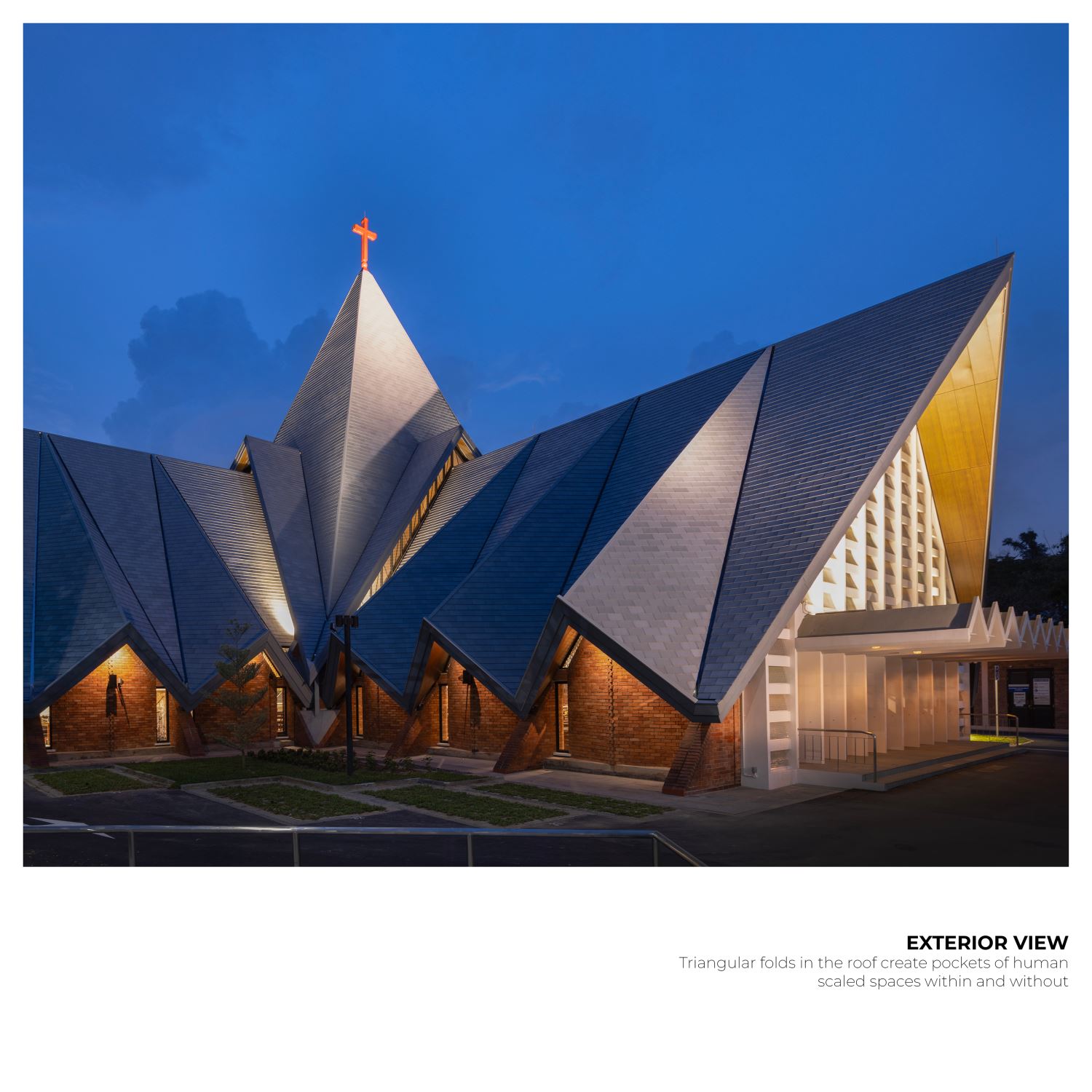
We decided to use a 3-dimensional LIDAR scanner for the entire roof and reverse engineer the structure to ensure the weight of the new roof system, new aluminium ceiling, and pendent lights can be kept within the structural capacity of the existing structure. Externally, the unique geometry of the roof folds resulted in complicated rainwater drainage systems, with discharge off the exterior planes; whilst the interior folds within junctions cluttered by Electrical Equipment and ftments that accumulated over time.
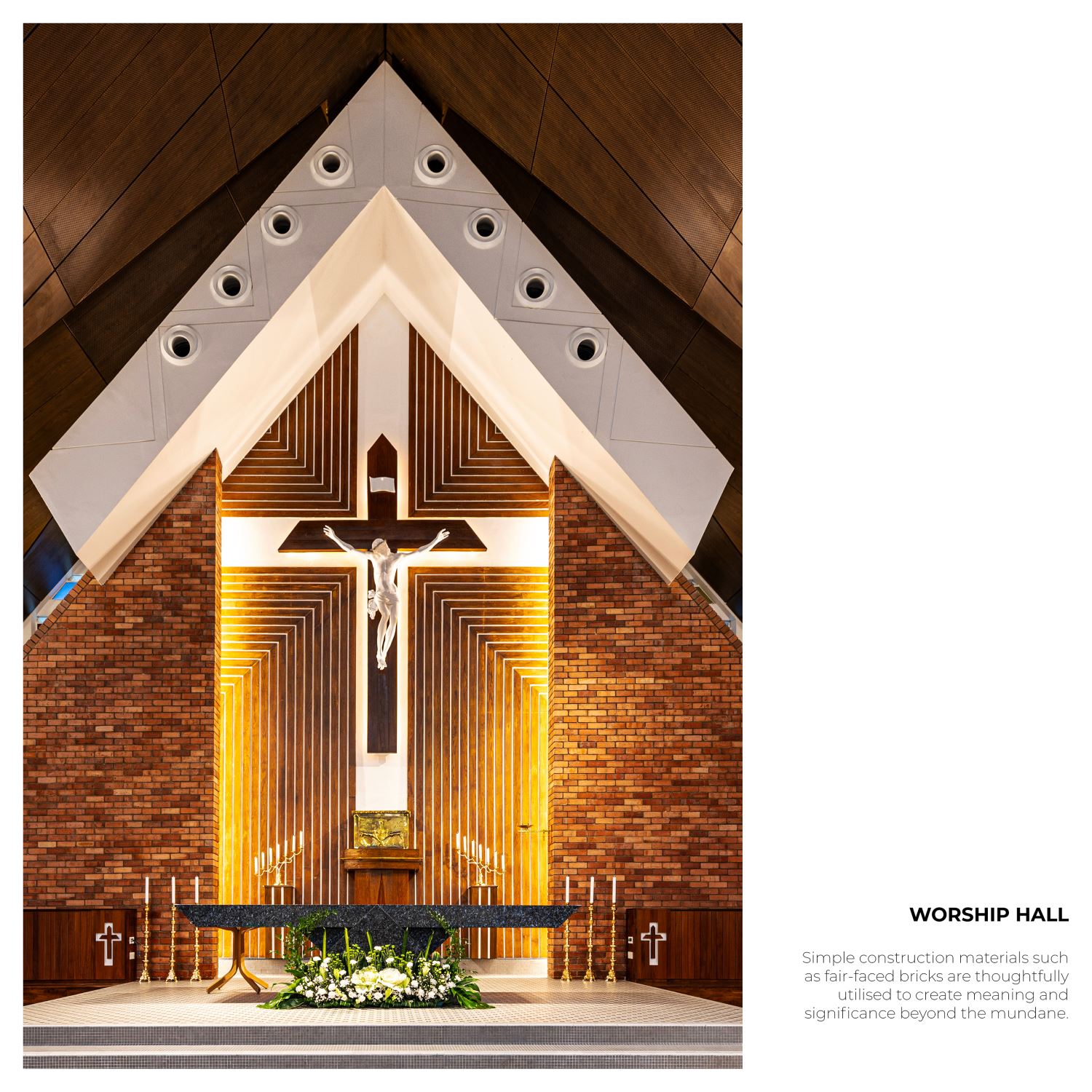
The Architects utilised scanning technology to better appreciate existing construction, and iterative 3-D printing of scaled models of these junctions was deployed to test out possible solutions. The result saw the integration of the new with the existing in a harmonious manner. Existing foor terrazzo and brick walls were cleaned, and new materials were sensitively inserted to blend into the old.



 loading......