
Architect Firm: Kim-O Architects Co., Ltd.
Principal Architect: KIM Jihee
Design Team: KIM Jihee
Location: Jeju City, Republic of Korea
Area: 195.21 square meters
Completion Date: May 2025
Photography: HWANG Hyo-chel
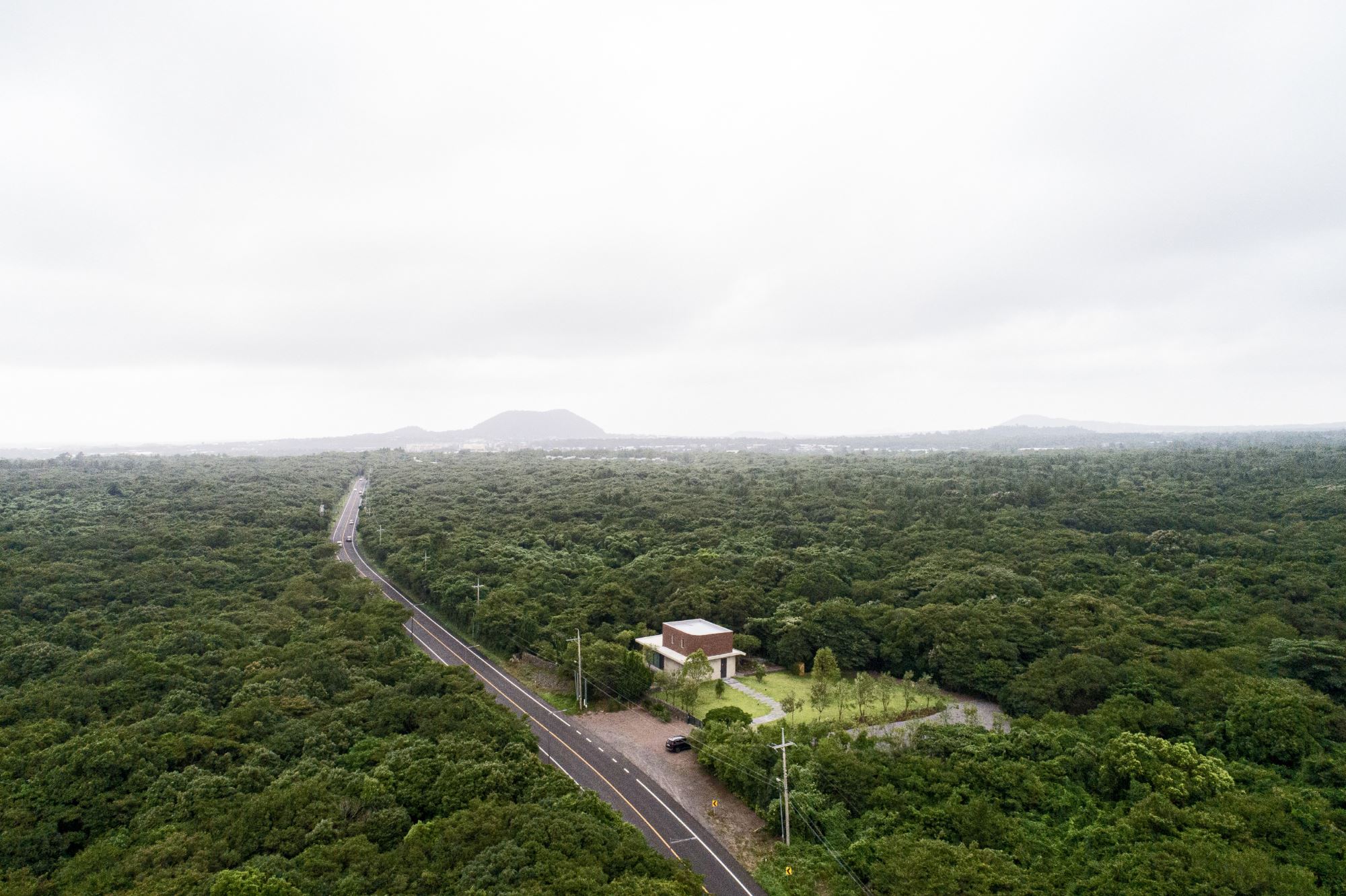
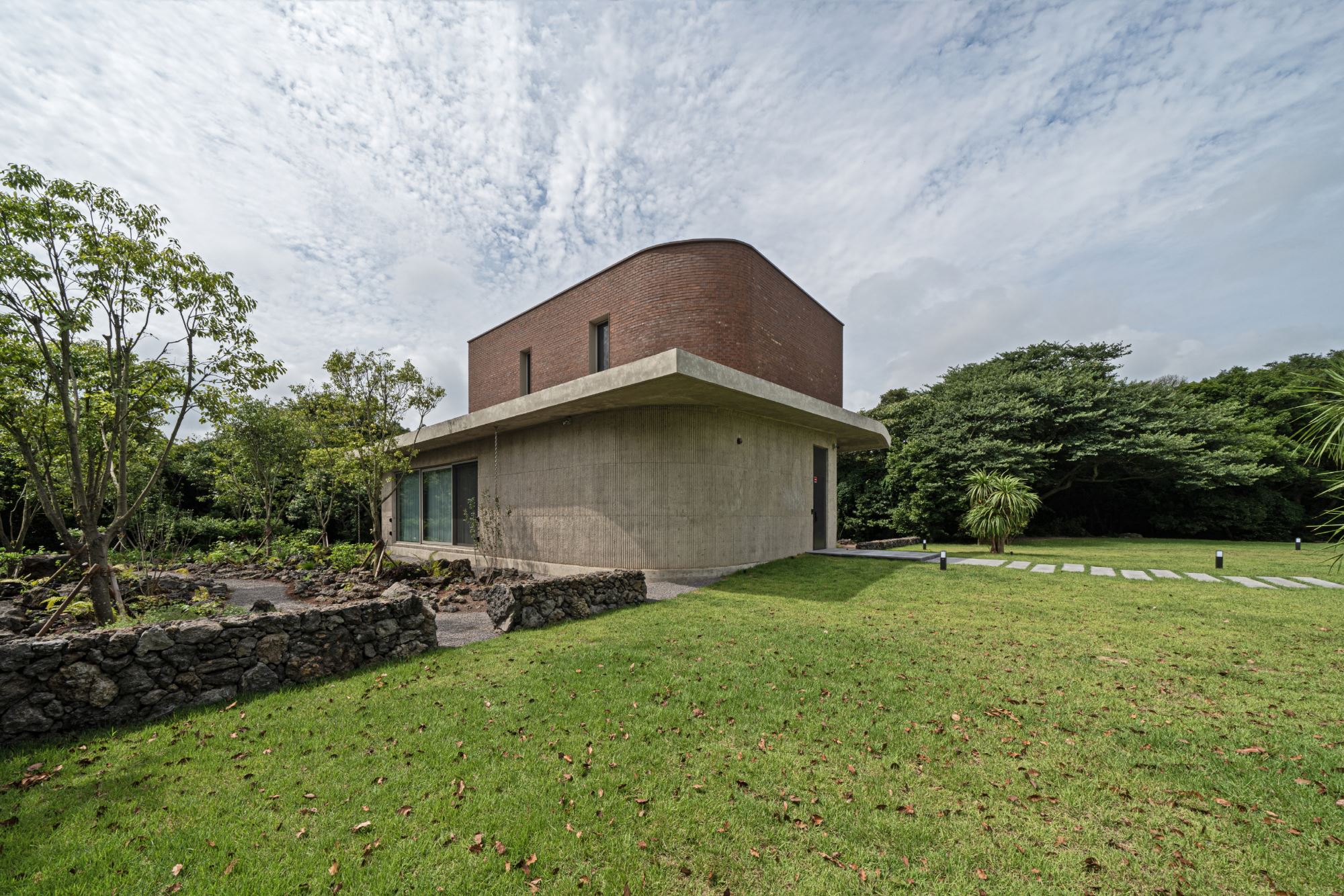
The Gotjawal House articulates the Korean notion of byeolseo-dwelling as reflective distance, where withdrawal from routine becomes engagement with presence. As a second residence for an elderly couple, the project reinterprets the traditional form of byeolseo (Byeolseo (別墅) refers to a secondary dwelling maintained apart from one's primary residence, historically associated with scholarly retreat and reflective distance from daily routine.) incorporating nugak (Nugak (樓閣) denotes an elevated, open-sided structure, frequently employed within byeolseo compounds to frame the landscape through raised sitting and unobstructed views.), structures open on all sides yet maintaining enclosure, where one sits elevated, looking down upon the landscape.
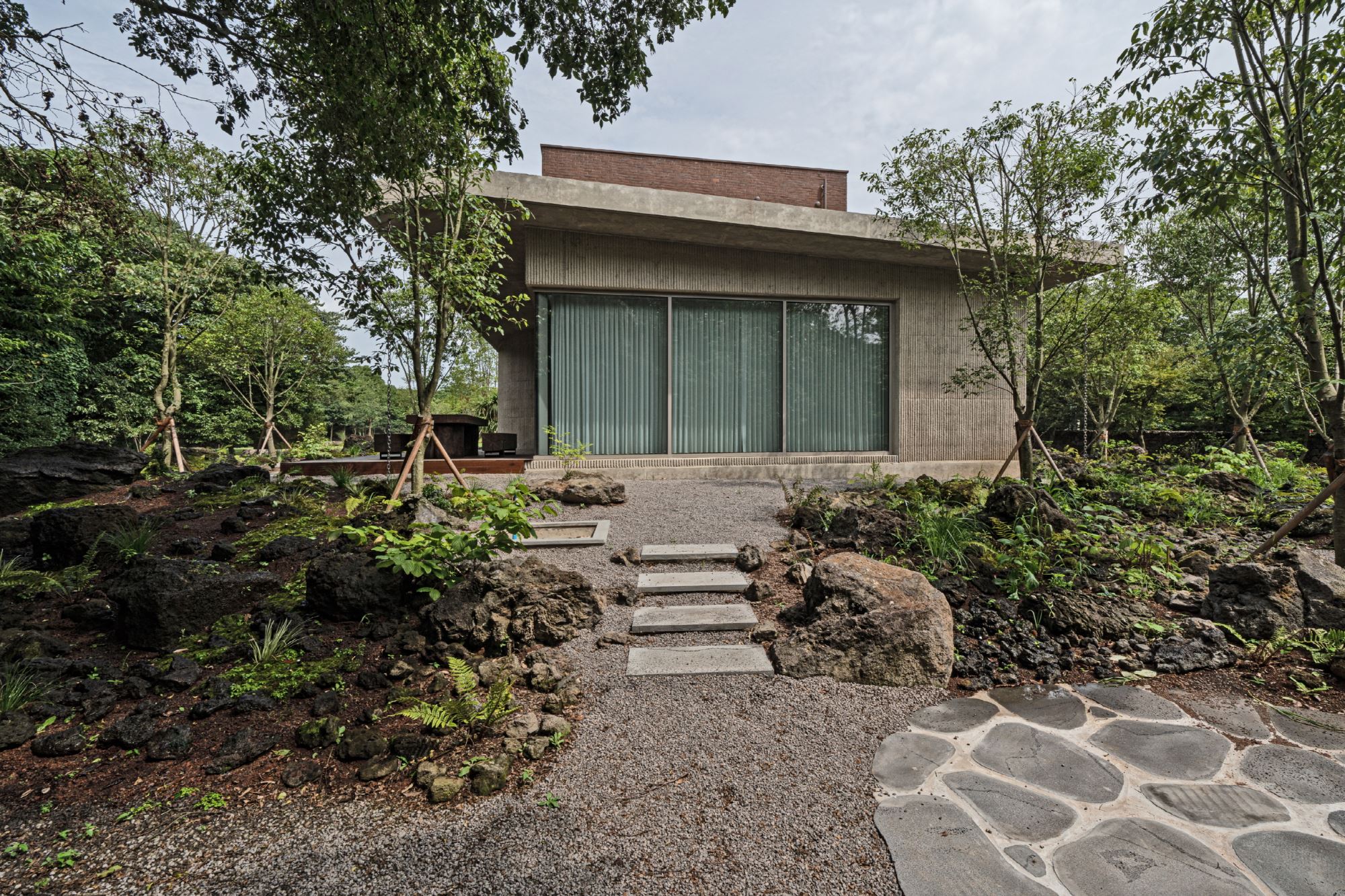
Anchored in Jeju's volcanic forest terrain, it mediates between body and landscape through awareness rather than form. The Gotjawal—dense lava rock, fractured topography, uneven ground-was physically present yet perceptually severed from dwelling. Instead of reproducing separation as distance, the architecture internalizes that distance as perception, transforming dwelling into an act of mindful coexistence with nature.
In phenomenological terms, seeing and being are inseparable. As Merleau-Ponty observed, "We see the things themselves; the world is what we see." This reciprocity between perception and existence forms the foundation of architectural thought. Seeing is not passive observation but an existential relationship between self and the world. To see the Gotjawal is not to register its form, but to sense its density—the air, humidity, and silence that shape one's being within it. The way of seeing determines the way of dwelling.
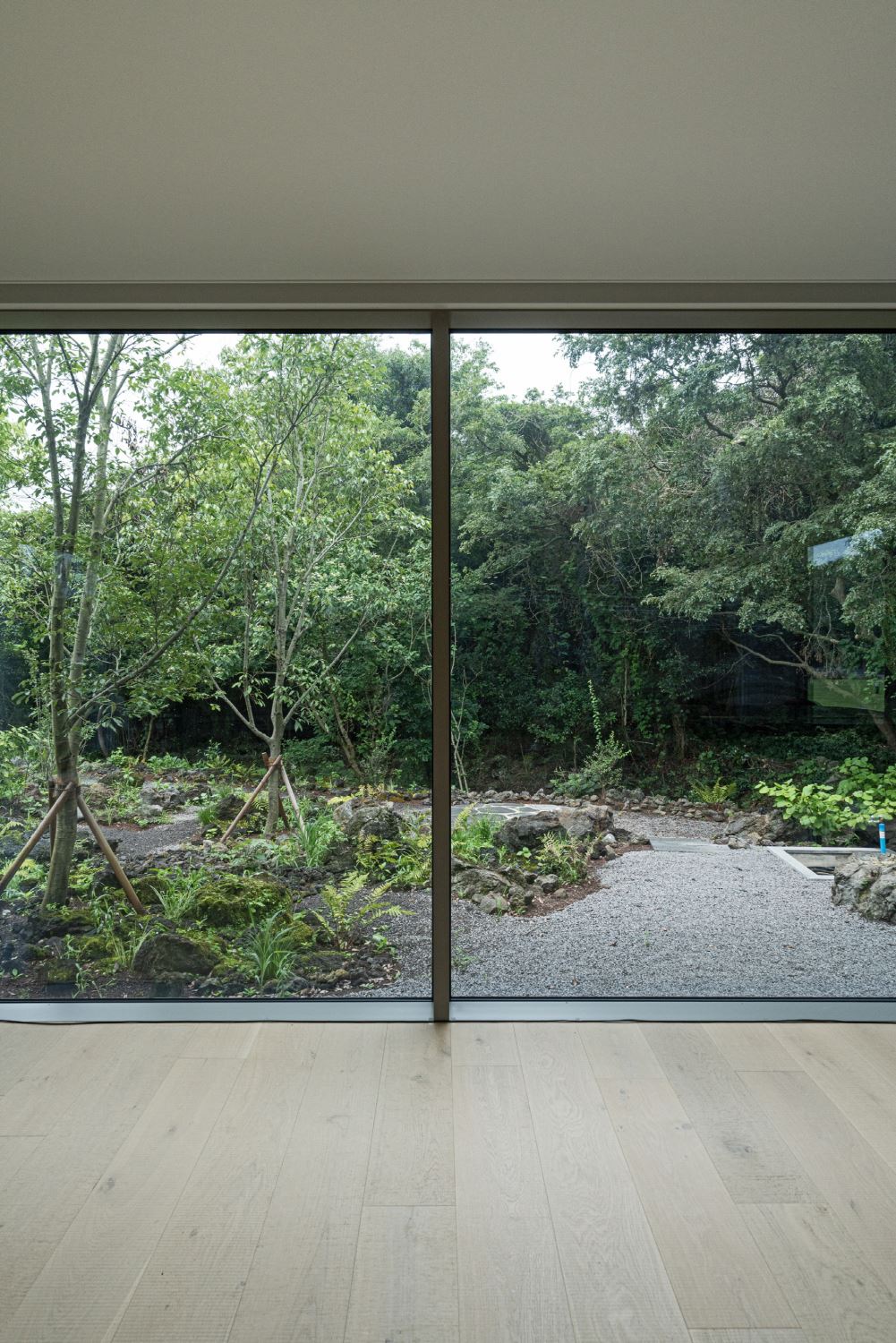
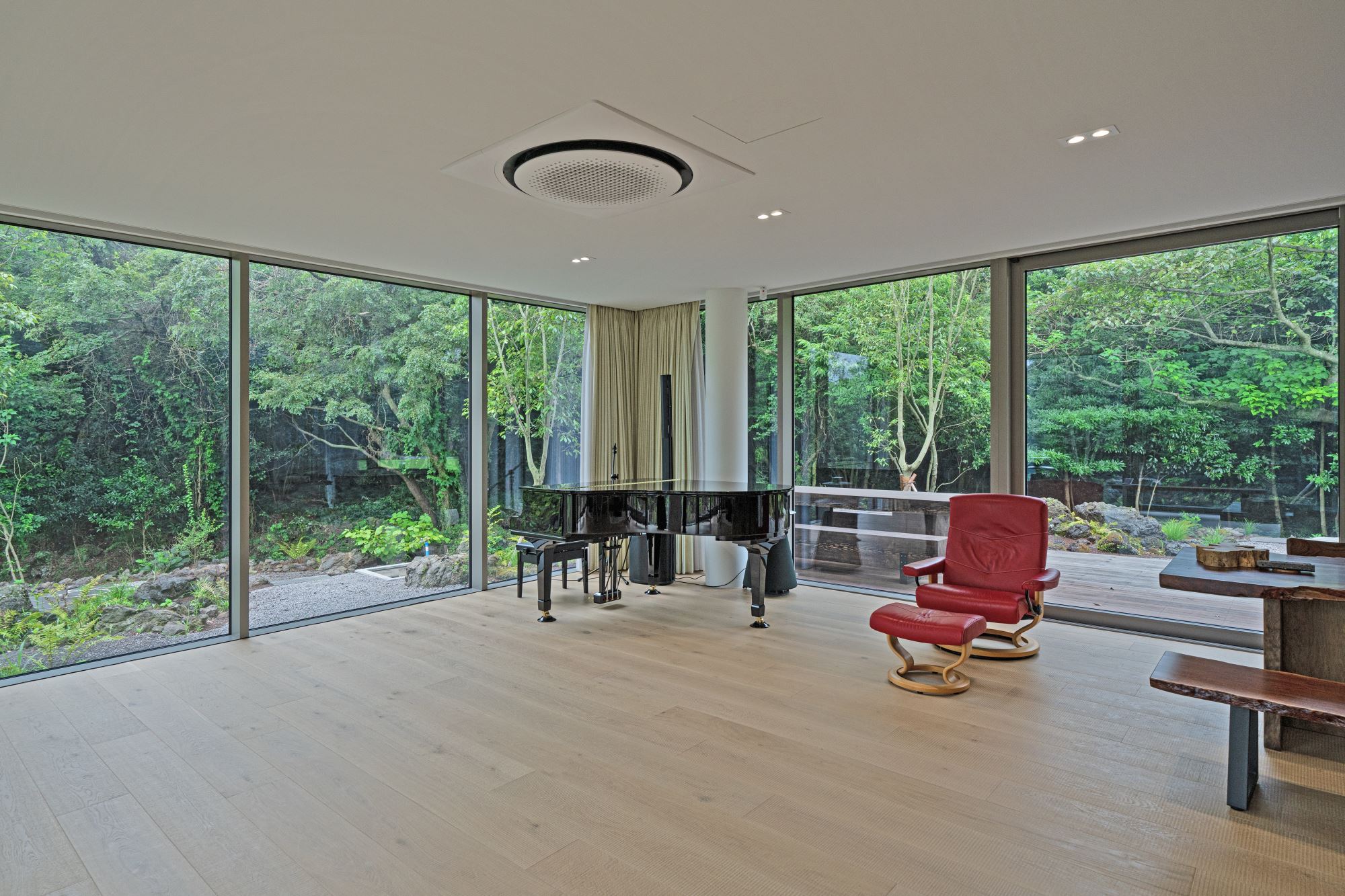
The Gotjawal House perceives the forest not as scenery, but as a subjective field that defines dwelling itself. Here, the inhabitant's life is shaped through coexistence with the forest, as nature becomes a partner in forming the inner structure of dwelling rather than its external backdrop.
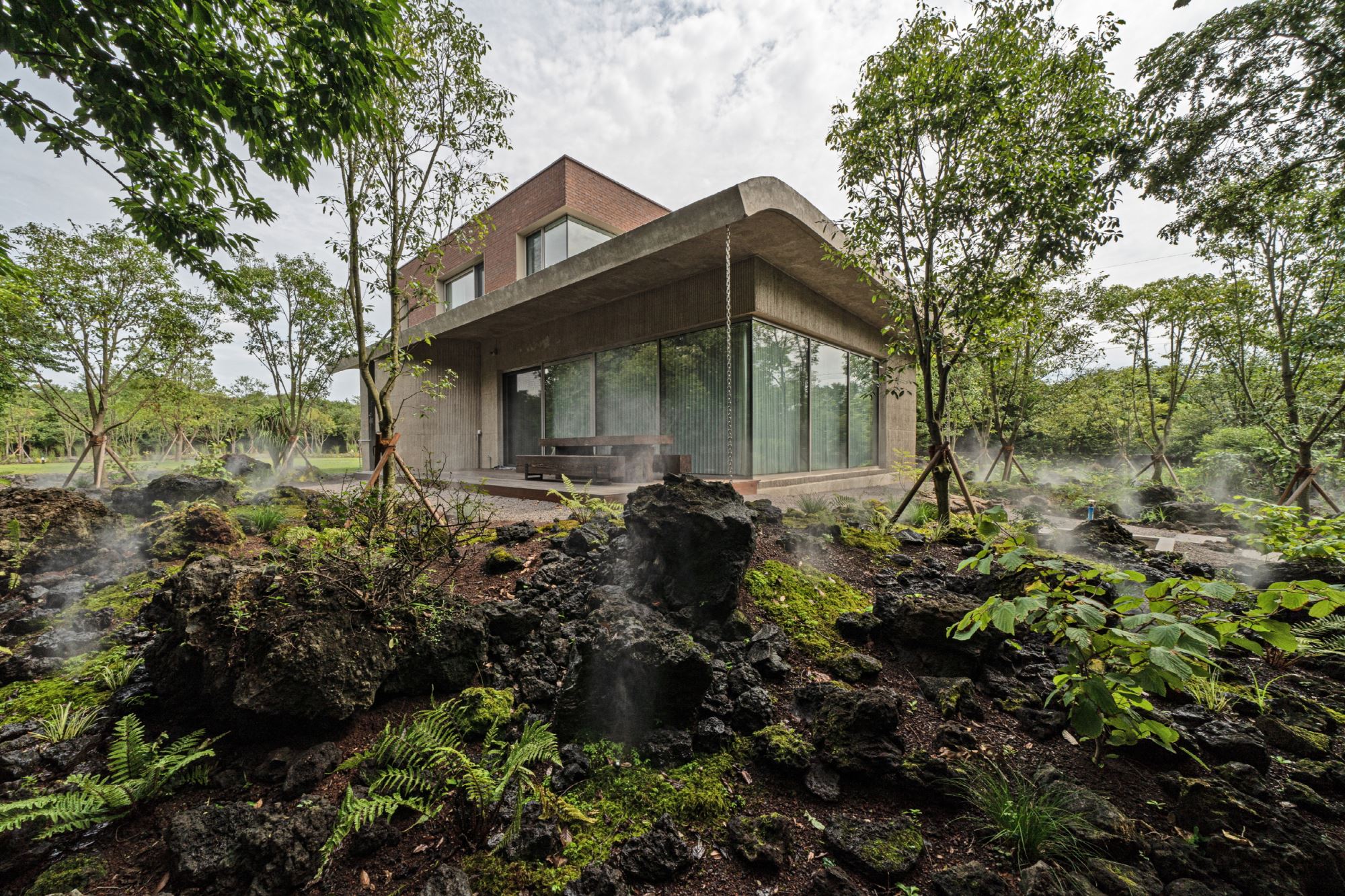
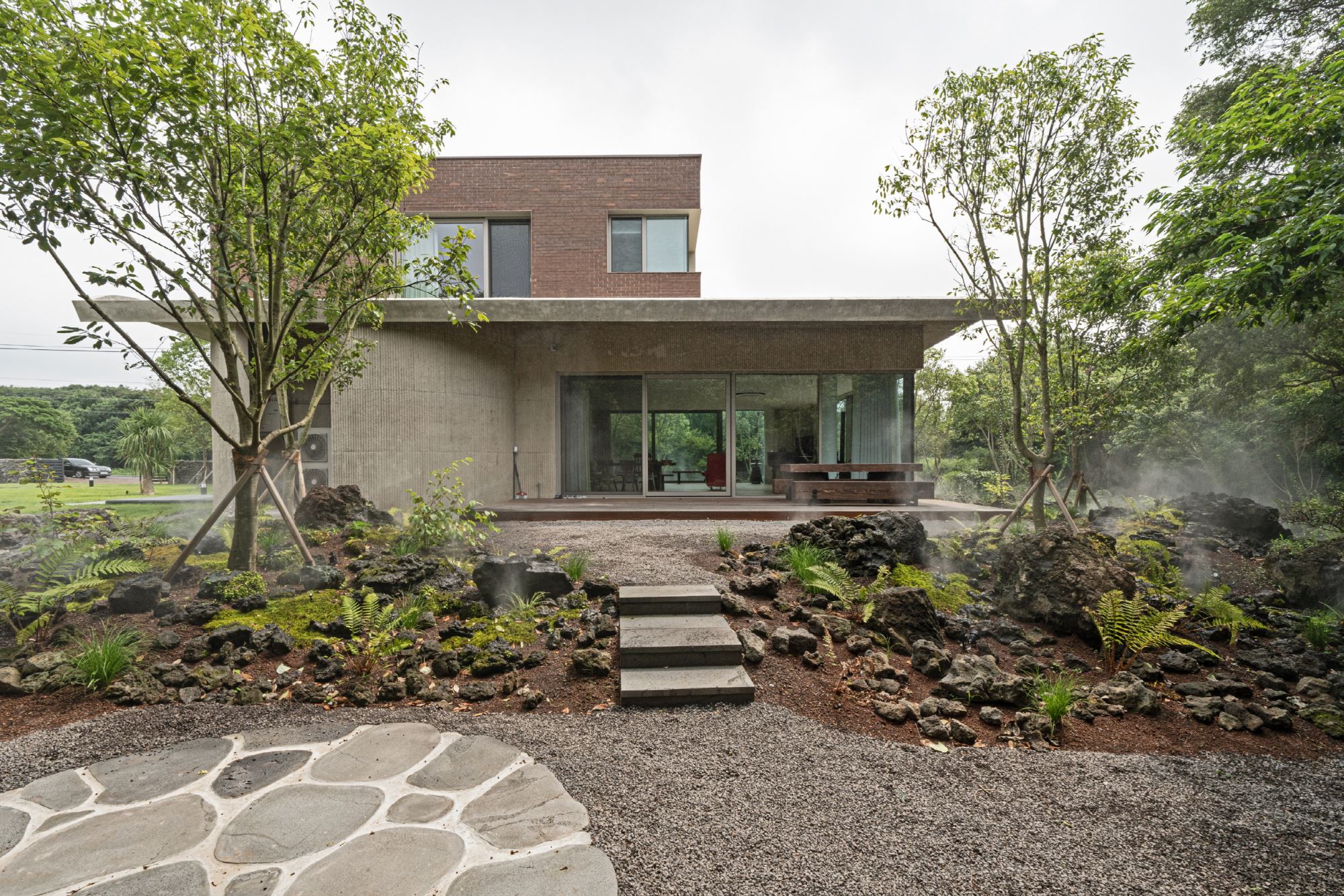
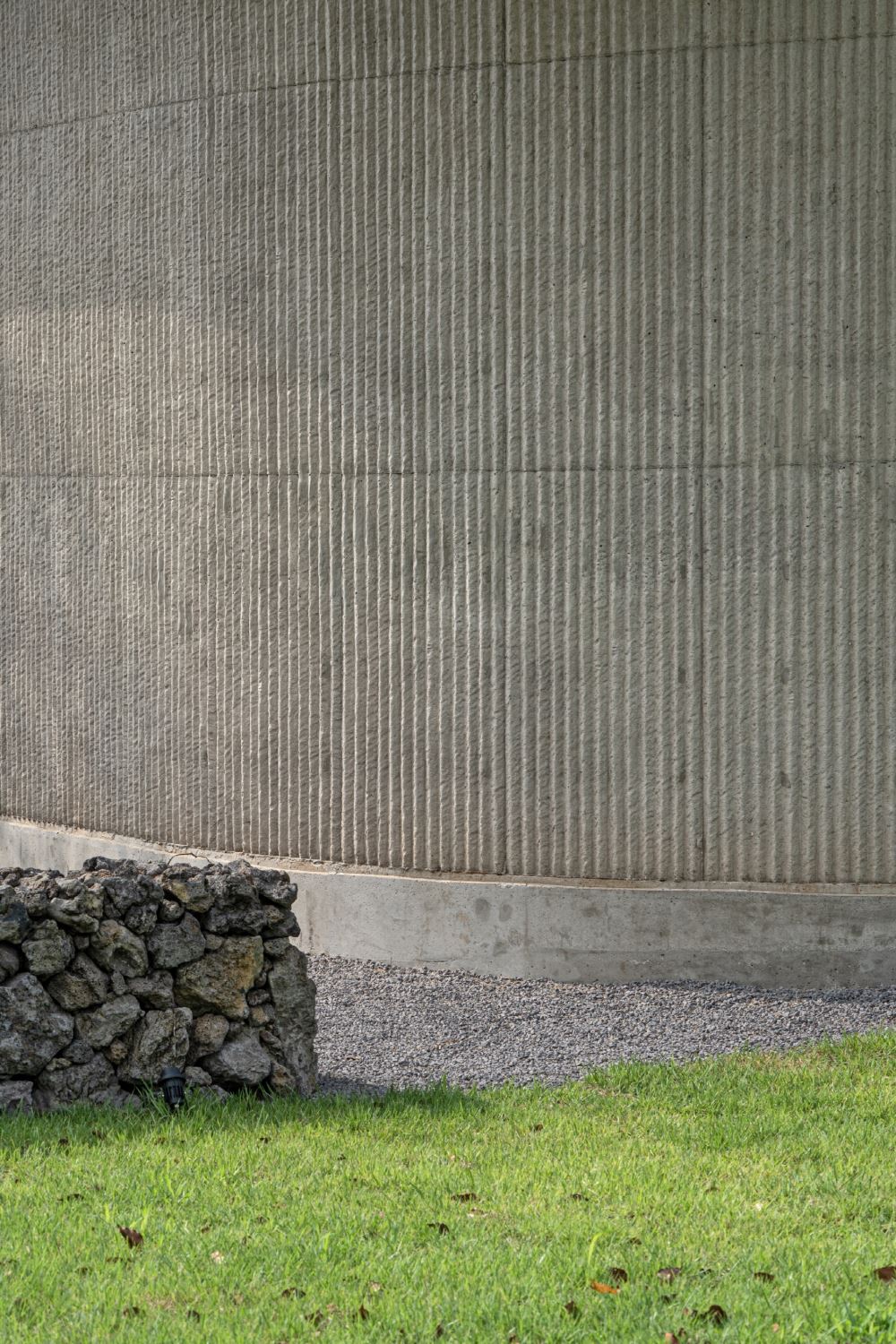
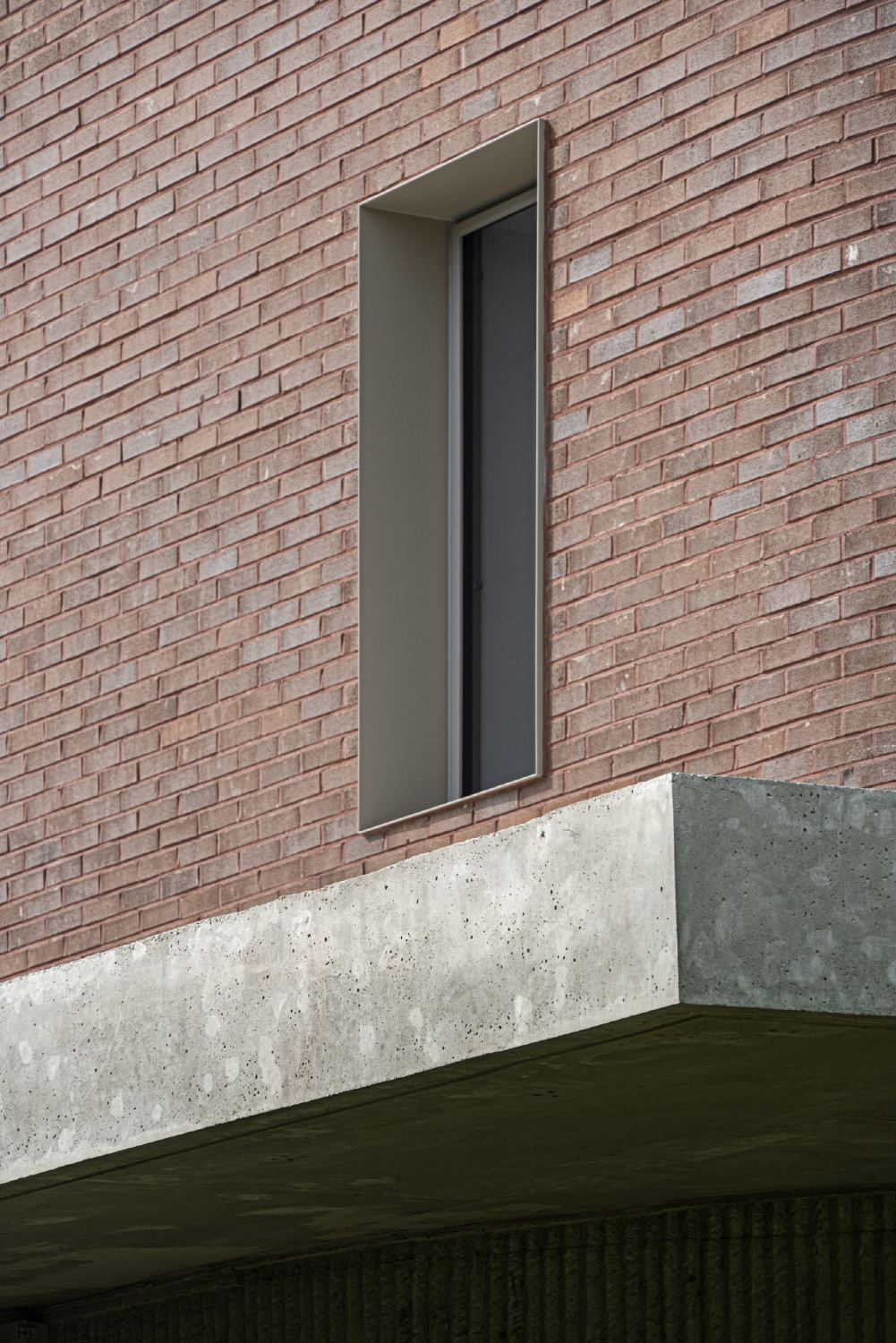
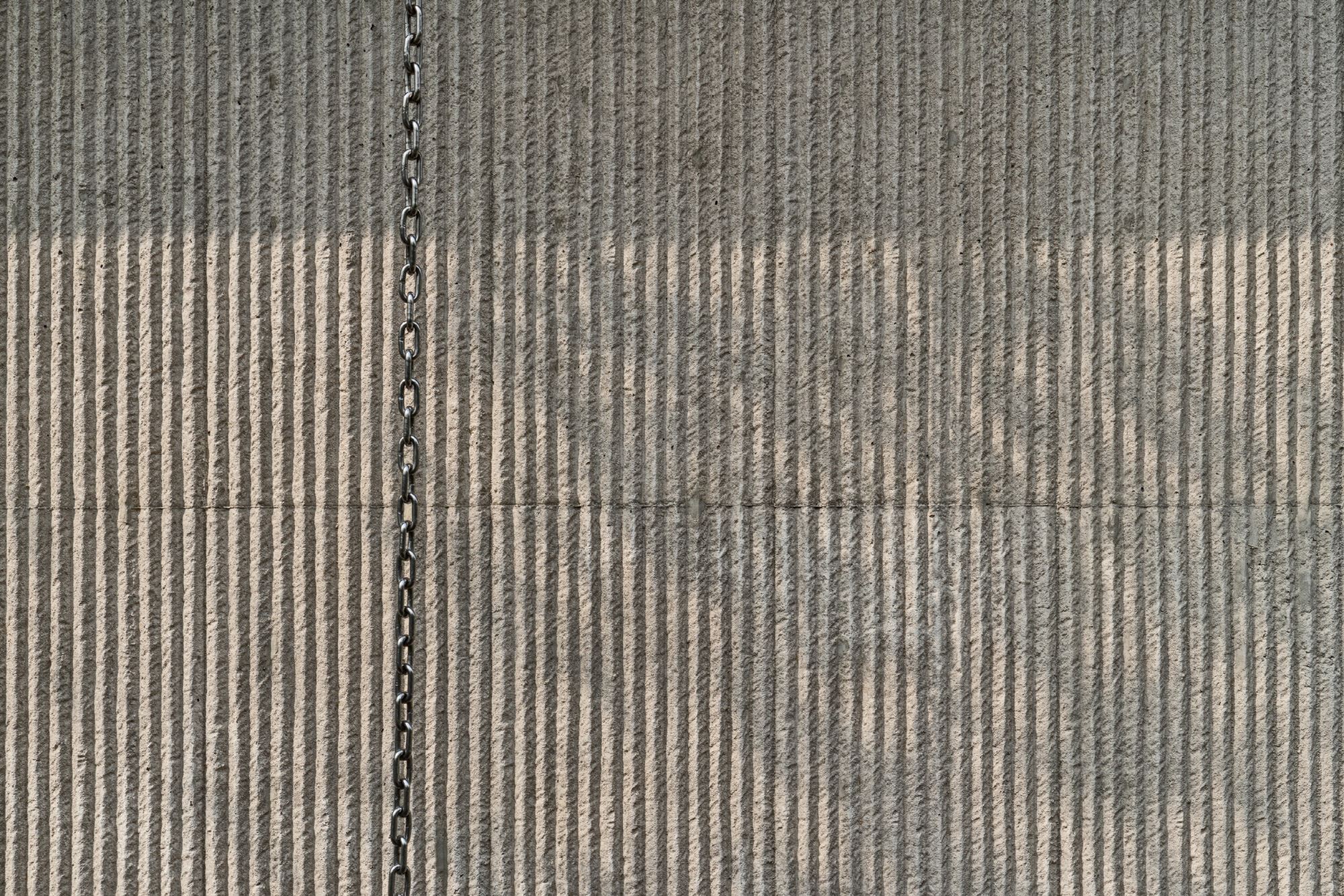
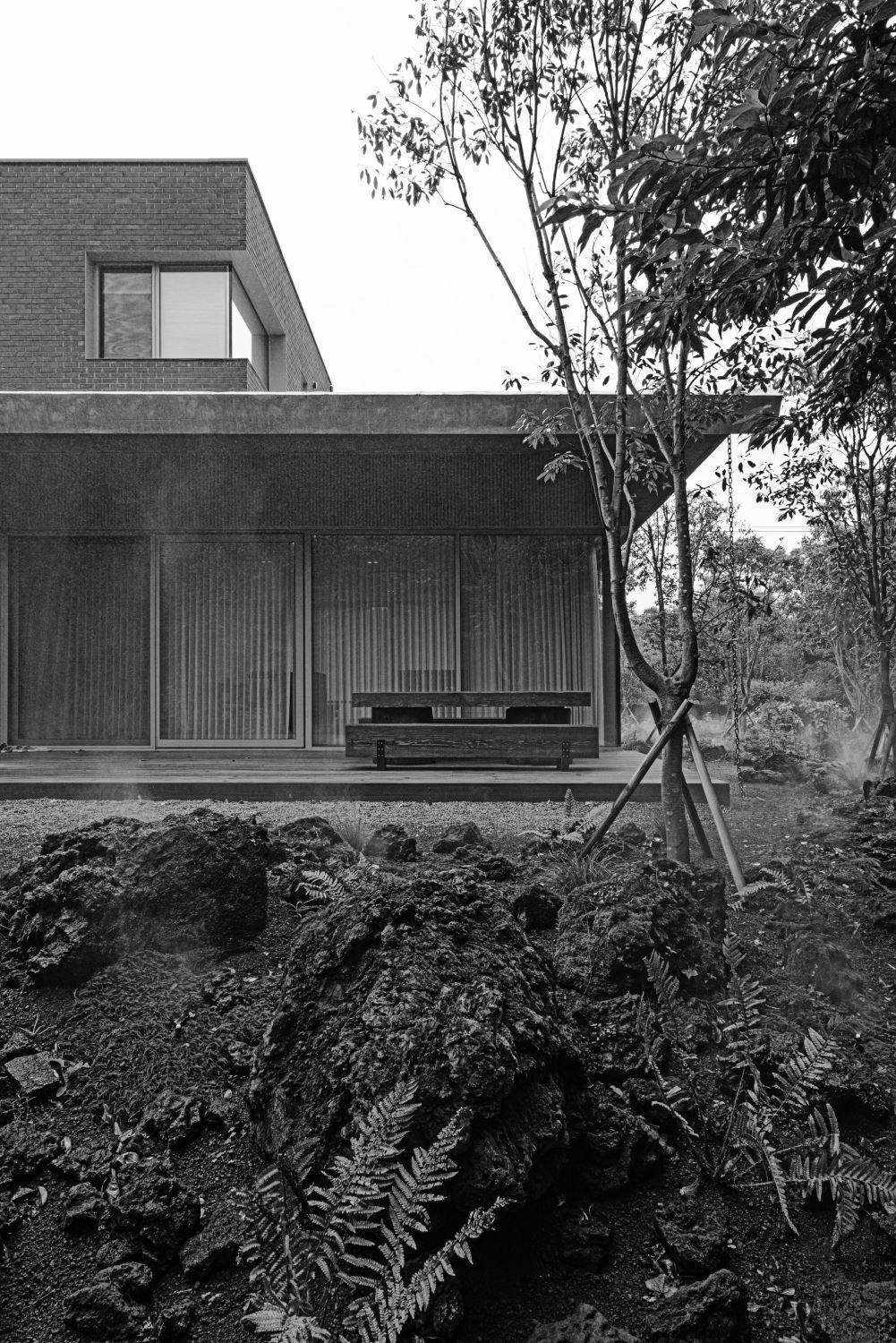
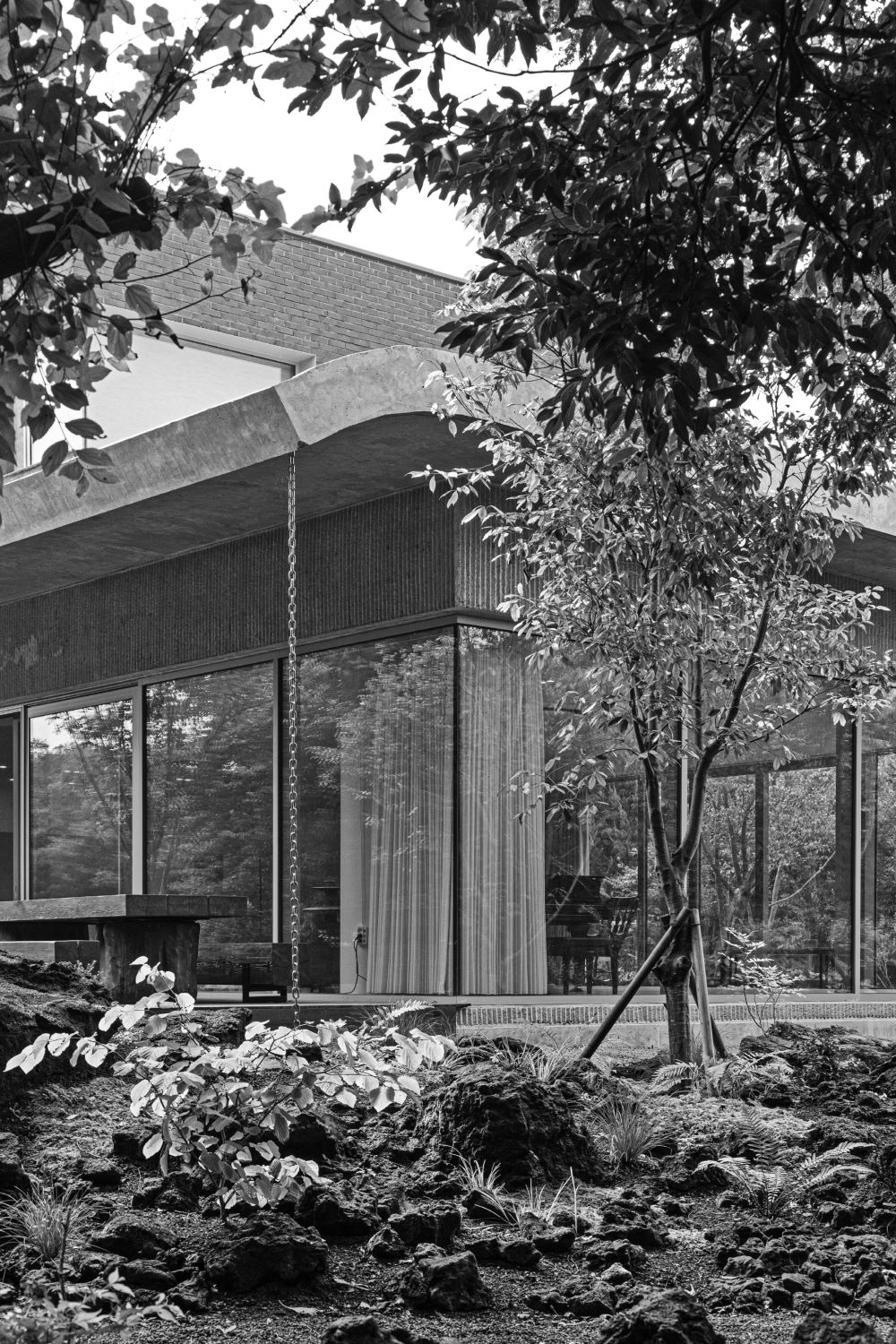
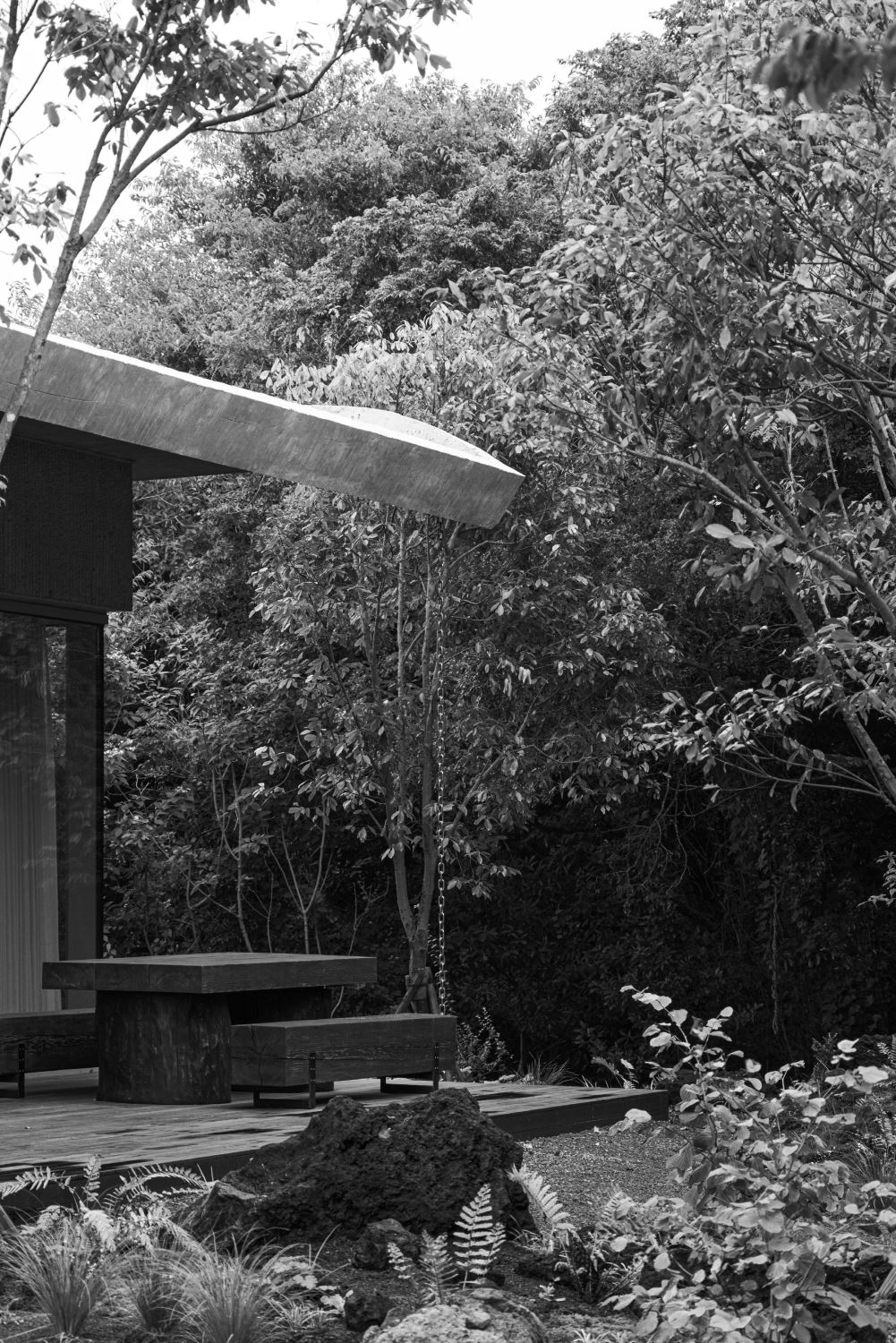
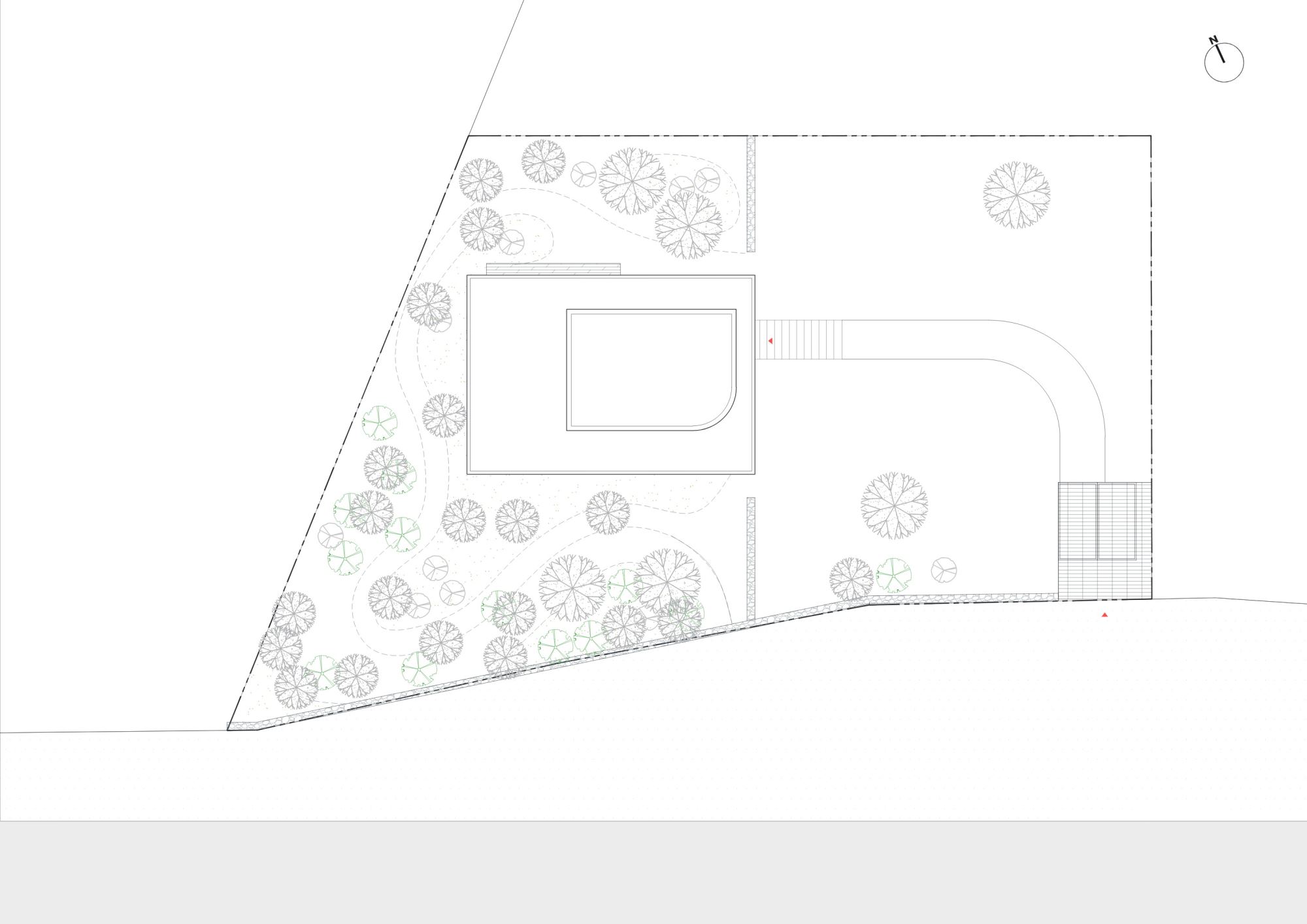
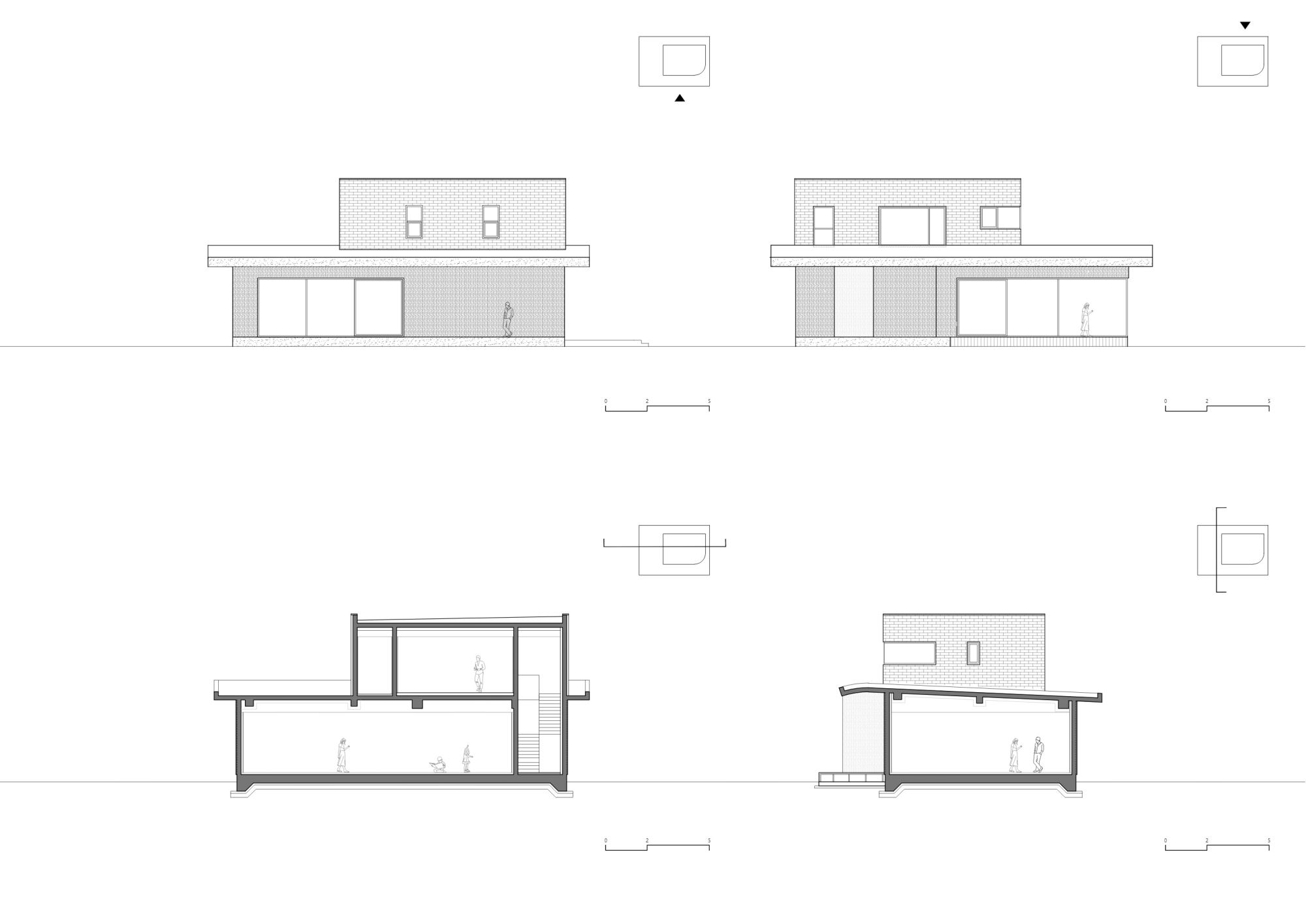
The architecture translates this reciprocal relationship through three spatial strategies. First, a subtly raised concrete plinth negotiates fractured topography while preserving rock outcrops and drainage, lifting dwelling above the forest floor. This measured elevation creates a threshold where perception begins—a quiet separation that transforms distance into awareness. Rough concrete surfaces echo the volcanic stone, grounding architecture in landscape.
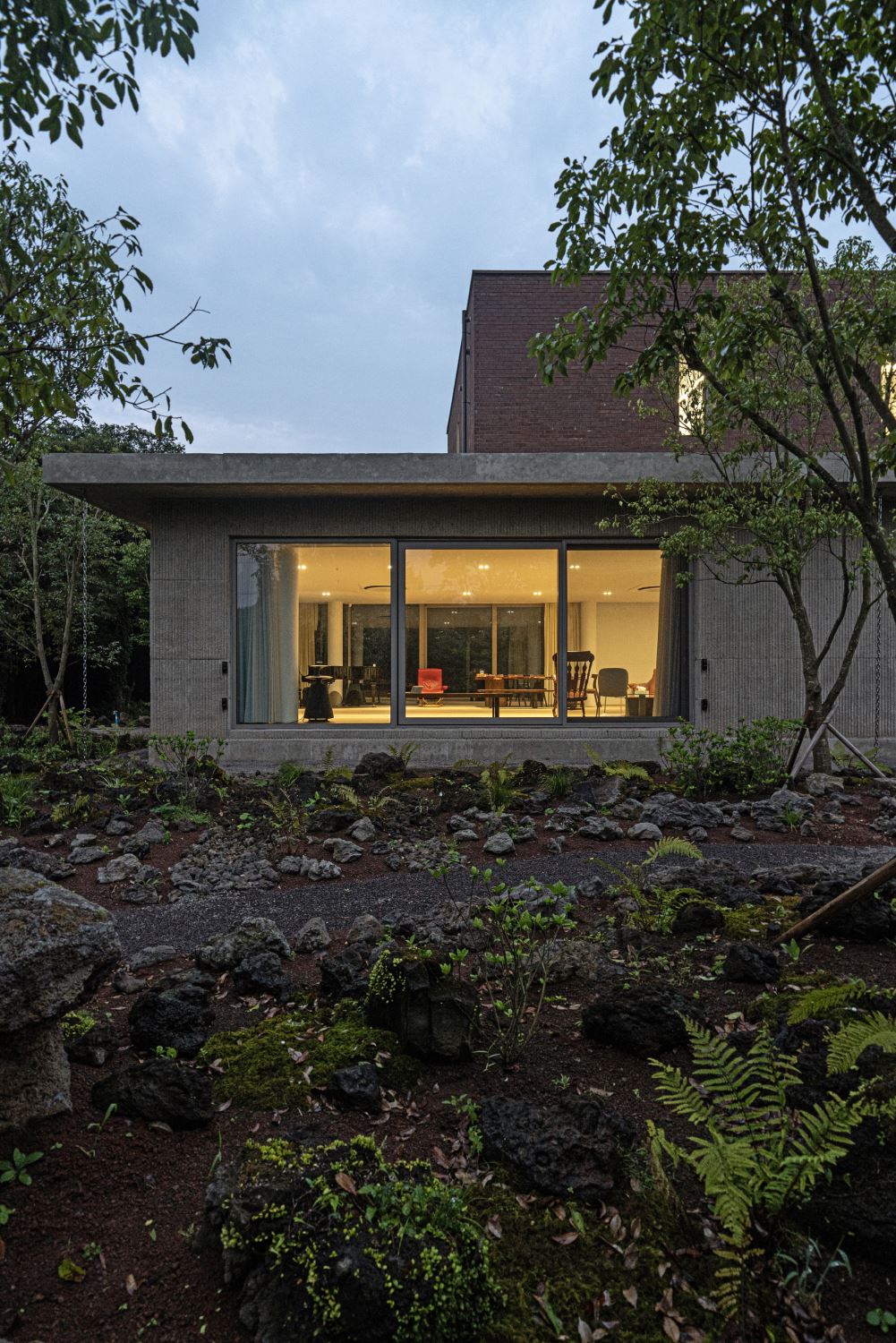
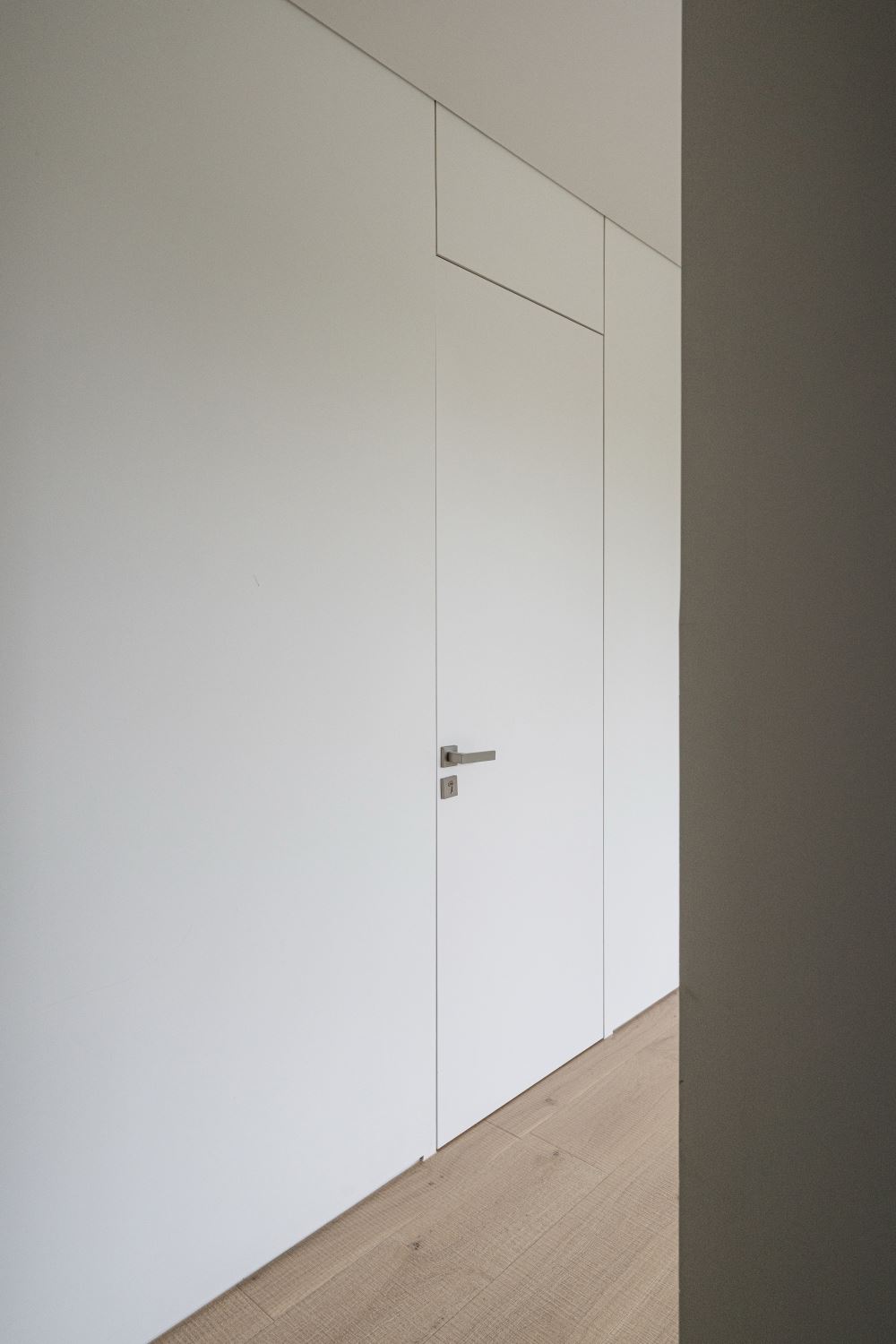
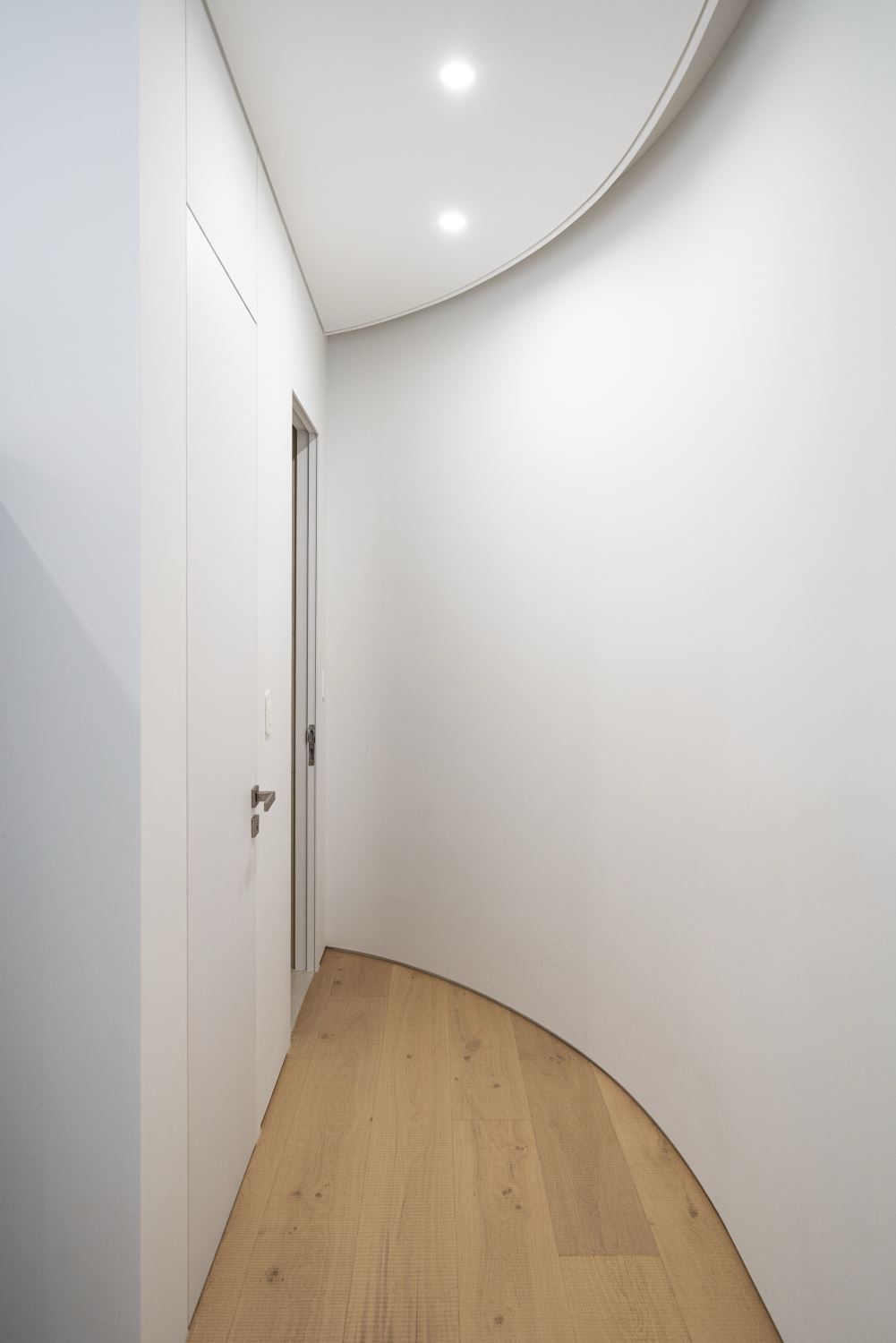
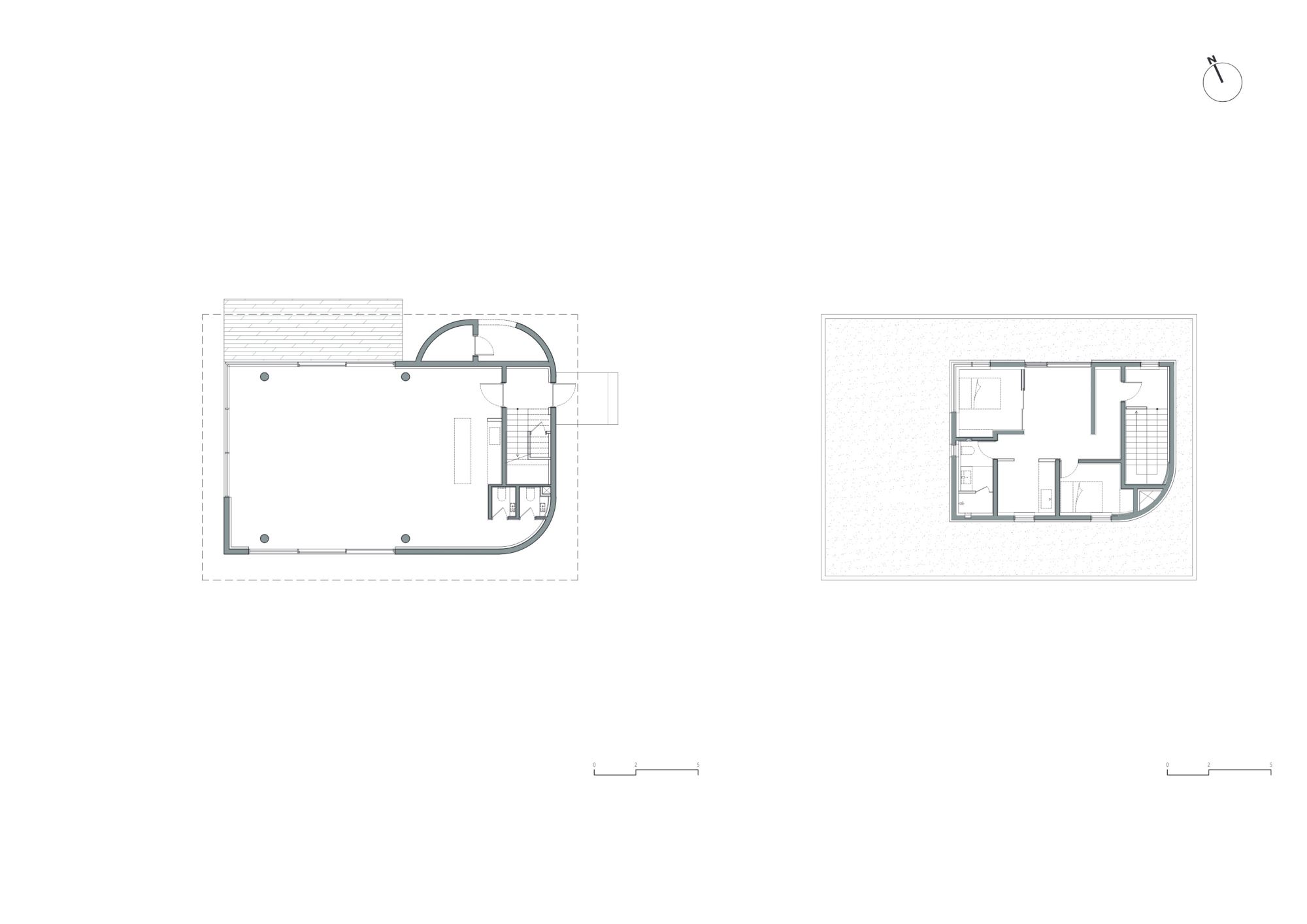
Second, internal passages allow air to move slowly through the house, drawing the forest breeze inside. Wind and humidity are not excluded but become part of the lived atmosphere of dwelling. The forest's atmosphere becomes the medium through which daily life unfolds.
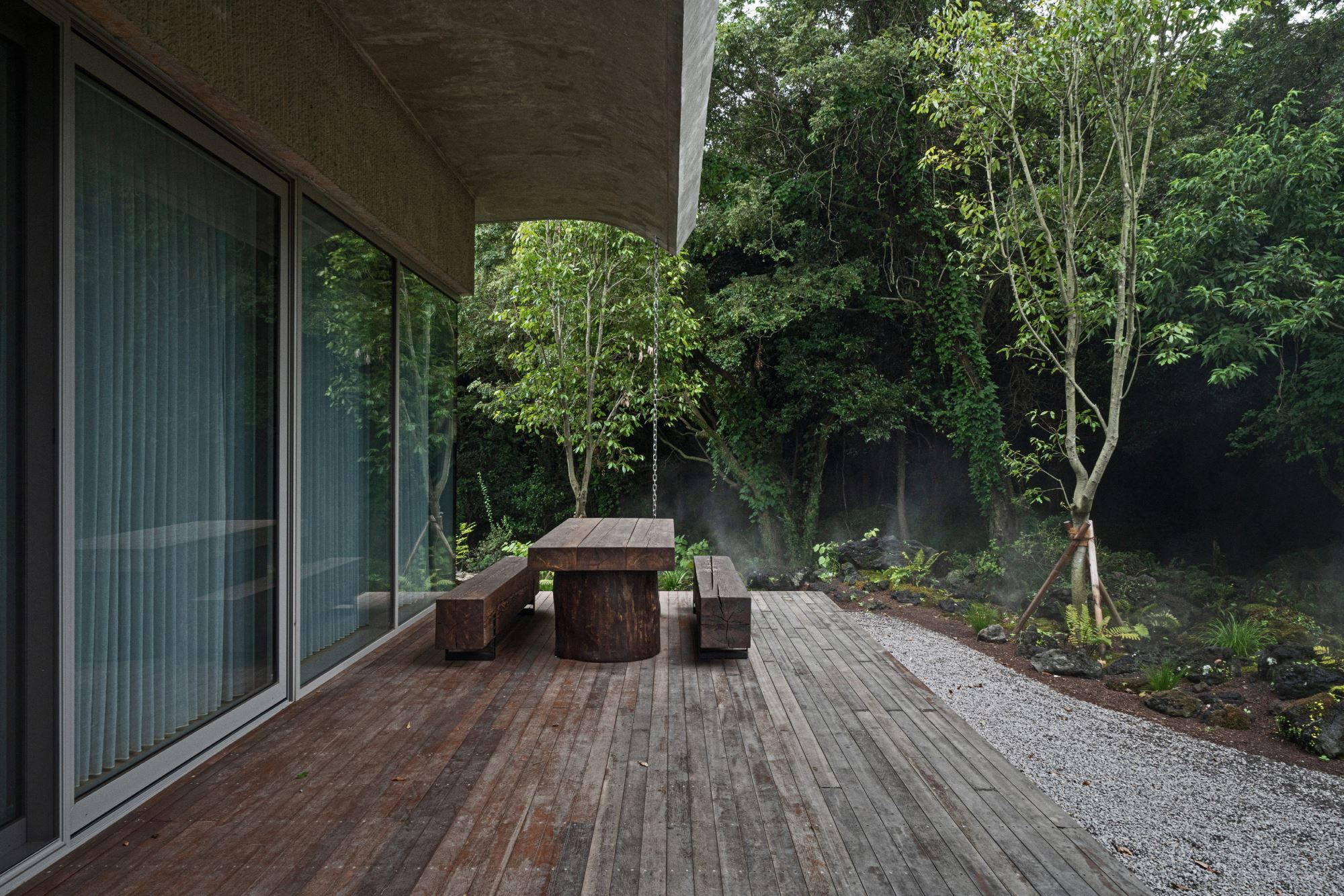
Third, the curved northern eave extends outward to receive light and shadow as fluid boundaries of space. It does not frame a view but orchestrates an atmospheric encounter, creating enclosure without closure, transforming the Gotjawal's density into a living membrane where interior and landscape engage in quiet exchange.
Together they structure perception as a slow sequence: stepping stones extend arrival, turning entry into ritual. Movements—stepping onto the plinth, sitting and gazing down at the forest, looking up at the sky beneath the eave-become moments of awareness.
The project demonstrates, through spatial restraint, that the mode of seeing does become the mode of dwelling. The forest becomes not scenery but what structures daily life. The Gotjawal ceases to be a passive backdrop and becomes an active condition of dwelling itself, reorganizing the way life is perceived and practiced.
Here, seeing is not an act within dwelling but dwelling itself. Seeing as dwelling. Dwelling as seeing.



 loading......